Artificial Intelligence in Dentistry
How Are Professionals Applying It?
e-BIONIKA News
The field of artificial intelligence has undergone remarkable development over the past two decades, expanding into areas we could not have imagined before. In medicine and dentistry, artificial intelligence has the potential to revolutionise patient care. It is capable of identifying normal and abnormal structures, diagnosing diseases, and predicting treatment outcomes. This review examines the current and future applications of artificial intelligence in dentistry. AI is transforming healthcare by enabling machines to perform tasks that were previously exclusive to humans. The advancement of artificial intelligence brings numerous benefits, including a reduction in complications, improved quality of life, better decision-making, and a decrease in unnecessary procedures.
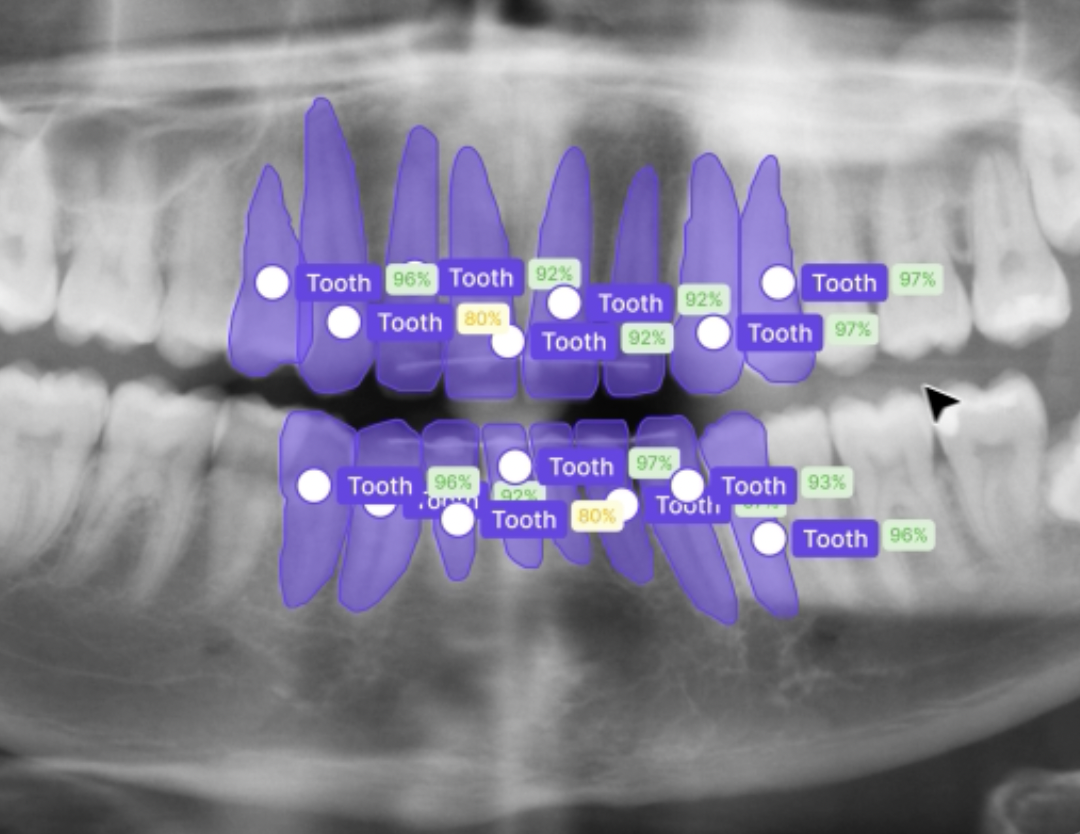
In medicine and dentistry, AI plays a pivotal role in improving diagnostic accuracy and transforming patient care. In dentistry, it is already used to identify structures, diagnose diseases, and predict treatment outcomes, and it is gaining increasing importance in dental education and laboratory settings. Our review examines the current and potential applications of artificial intelligence in dental practice.
What Is Artificial Intelligence?
Artificial intelligence (AI) is a branch of computer science focused on creating intelligent entities, typically in the form of software. Traditionally, AI systems relied on hand-crafted rules to solve specific tasks, requiring human expertise and fine-tuning. Modern AI, however — particularly machine learning (ML) and deep learning (DL) — has evolved significantly.
ML enables systems to learn intelligent tasks without prior knowledge or hand-crafted rules. By training on large datasets, it identifies patterns and optimises tunable functions to achieve its goals. DL builds on this by creating a hierarchy of composable, stacked patterns, resulting in higher-performance systems.
One popular class of DL algorithms is the artificial neural network (ANN), composed of neurons connected in layers. Convolutional neural networks (CNNs), a subclass of ANNs, excel at image classification tasks by using a sliding-window technique to process digital signals.
In medicine and dentistry, CNNs are widely used for image recognition and classification. They have proven highly effective in analysing medical images and signals, revolutionising healthcare applications.
Note: The sliding-window technique is a computational method designed to reduce the use of nested loops by replacing them with a single loop, thereby lowering time complexity.
Clinical Applications of AI in Dentistry
Radiology:
CNNs have shown promising capabilities in recognising and identifying anatomical structures. For example, they can identify teeth on periapical radiographs with an accuracy of 95.8–99.45%, which is nearly comparable to that of clinical experts (99.98%).
CNNs have also been successful in detecting and diagnosing dental caries. On periapical radiographs of 3,000 posterior teeth, they achieved an accuracy of 75.5–93.3% and a sensitivity of 74.5–97.1%, significantly outperforming clinicians performing diagnosis from radiographs alone, where sensitivity ranged from 19% to 94%. Deep CNNs hold great potential for improving caries diagnosis, offering better sensitivity and speed as an effective tool in this field.
Orthodontics
ANNs hold significant potential in supporting clinical decision-making, particularly in orthodontic treatment. Precise planning is essential for achieving predictable outcomes, but decisions regarding tooth extraction must be carefully considered before initiating irreversible interventions.
To assist in this process, an ANN was applied to determine the necessity of tooth extraction prior to orthodontic treatment in patients with malocclusion. Four ANNs constructed with multiple clinical indicators demonstrated an impressive accuracy of 80–93% in determining whether extraction was required to address patients' malocclusion.
Periodontology
The 1999 classification of the American Academy of Periodontology recognises two clinical types of periodontitis: aggressive (AgP) and chronic (CP). Distinguishing between them is challenging due to the complex nature of the disease, and no single test can effectively do so. However, Papantanopoulos et al. used an ANN to differentiate between AgP and CP in patients, utilising immunological parameters such as leukocytes, interleukins, and IgG antibody titres.
The ANN achieved an accuracy of 90–98% in classifying patients into AgP or CP categories. The most accurate predictions were produced by an ANN that incorporated input data such as monocyte, eosinophil, and neutrophil counts, as well as the CD4+/CD8+ T-cell ratio. The study demonstrated that ANNs can accurately diagnose AgP or CP based on readily available parameters, such as peripheral blood leucocyte counts.
Various non-surgical and surgical methods exist for treating periodontally compromised teeth (PCT) and their supporting structures. Despite advances in treatment, diagnosing PCT and predicting its prognosis remain challenging, and often rely on empirical evidence.
Lee et al. investigated the potential of deep CNN algorithms for diagnosing and predicting PCT. The CNN algorithm achieved a diagnostic accuracy of 76.7–81.0% and predicted the need for extraction with an accuracy of 73.4–82.8%. Differences in accuracy were observed across tooth types, with premolars (82.8%) diagnosed more accurately than molars (73.4%), likely due to the latter's more complex anatomy involving multiple roots.
Endodontics
Mandibular molars generally share a similar root canal configuration, but atypical variations can occur. To improve endodontic treatment outcomes and manage morphological variations, cone beam computed tomography (CBCT) is considered the gold standard despite its higher radiation dose. To address this, artificial intelligence — specifically a CNN — was introduced to classify data and detect additional canals in the distal root of the first mandibular molar. The CNN achieved a relatively high accuracy of 86.9%; however, clinical integration presents challenges such as time-consuming manual image segmentation and the need for appropriately sized images that focus on the object of interest while capturing relevant information.
Oral Pathology
Early detection and accurate diagnosis of oral lesions are critical in dental practice, particularly because some lesions may be pre-cancerous or malignant. CNNs have proven to be a promising diagnostic aid for head and neck cancer lesions, demonstrating a specificity of 78–81.8% and an accuracy of 80–83.3%, which is comparable to that of specialists (83.2% and 82.9%).
In one study, a CNN algorithm successfully differentiated between maxillary tumours of similar appearance but distinct clinical characteristics: ameloblastomas and keratocystic odontogenic tumours. The algorithm achieved a specificity of 81.8% and an accuracy of 83.3%, comparable to those of specialists (81.1% and 83.2%). Notably, the CNN dramatically reduced diagnostic time, achieving similar results in just 38 seconds compared to an average of 23.1 minutes for specialists.
Challenges of Artificial Intelligence
The deployment of AI systems in healthcare faces significant challenges in managing and sharing clinical data. Personal patient data is essential for training and improving AI algorithms, but privacy concerns necessitate anonymisation before broader distribution.
Security concerns also raise issues, and mechanisms must be implemented to monitor the quality of AI algorithms. Unclear accountability raises questions about who is responsible for unintended consequences caused by AI technology.
Transparency in AI algorithms and data is essential for accurate predictions. Poorly labelled datasets can lead to inferior outcomes, and healthcare professionals must be able to understand and validate the decisions made by AI systems. The interpretability of AI technology remains a significant challenge, and considerable progress is needed before certain algorithms can deliver transparent clinical diagnoses.
BIONIKA is pleased to develop new systems together with you, including through the application of artificial intelligence. Contact us:
Sources:
Ding, H., Wu, J., Zhao, W., Jukka Pekka Matinlinna, Burrow, M.F. and James Kit-Hon Tsoi (2023). Artificial intelligence in dentistry—A review. [online] 4. doi:https://doi.org/10.3389/fdmed.2023.1085251.
Agrawal, P. and Pradnya Nikhade (2022). Artificial Intelligence in Dentistry: Past, Present, and Future. [online] doi:https://doi.org/10.7759/cureus.27405.
Dr Ahmad Al-Hassiny (2023). The Role of AI in Dentistry - Institute of Digital Dentistry. https://instituteofdigitaldentistry.com/news/the-role-of-ai-in-dentistry/
Yu KH, Beam AL, Kohane IS. Artificial intelligence in healthcare. Nat Biomed Eng. 2018;2(10):719-31.
Topol EJ. Deep medicine: how artificial intelligence can make healthcare human again. 1st ed. New York: Basic Books; 2019.
Russell SJ, Norvig P. Artificial intelligence: a modern approach. 3rd ed. Hoboken, N.J.: Prentice Hall; 2010.
Muller J, Massaron L. Artificial intelligence for dummies. Hoboken, N.J.: John Wiley & Sons; 2018.
James G, Witten D, Hastie T, Tibshirani R. An introduction to statistical learning with applications in R. New York: Springer; 2013.
Goodfellow I, Bengio Y, Courville A. Deep learning. 1st ed. Cambridge, Mass.: MIT Press; 2016.
Murphy KP. Machine learning: a probabilistic perspective. Cambridge, Mass.: MIT Press, 2012.
Ferro AS, Nicholson K, Koka S. Innovative trends in implant dentistry training and education: a narrative review. J Clin Med. 2019;8(10):1618.
Article information
- Author | Hajdú József
- Date | 2022.07.29.
- URL | www.bionika.hu