BIONIKA Bone Grafting in a Single Phase with Implantation,
without Tacking Screws
More than one year of promising results with the BIONIKA 3D Builder embossed titanium mesh
Patients with insufficient bone volume present a serious clinical challenge even for the most experienced dental practitioners. Modern medical technology offers a wide range of solutions for bone augmentation, which is particularly necessary during implant placement. Several treatment modalities have become established in practice: lateral augmentation, sinus elevation, alveolar preservation, ridge splitting, and bone block transplantation. In the following, we present a bone grafting method that delivers reliable, predictable outcomes.
Titanium Mesh or Collagen Membrane?
Both resorbable and non-resorbable membranes can be used to eliminate bone defects; the most common types are titanium meshes and collagen membranes. Many clinicians consider resorbable collagen membranes the more advantageous option, as they eliminate the need for a second surgical procedure to remove the material. However, their physical properties deteriorate upon contact with blood or moisture, and they lack space-maintaining capacity, which can lead to displacement within the oral soft tissues and result in inadequate bone regeneration.
The advantage of titanium membranes lies in their superior mechanical strength compared to resorbable membranes. A micro-perforated surface ensures free flow of tissue fluids, thereby preventing mucosal irritation. The titanium membrane precisely defines the site of bone augmentation, serves as a carrier for bone substitute materials, minimises mobility, and blocks the migration of soft tissue into the bone regeneration area. Plate thickness influences the space-maintaining capacity and stability of soft tissue. BIONIKA titanium membranes are available on request in thicknesses of 0.1 mm and 0.2 mm.
Which Is More Effective — 2D or 3D Titanium Mesh?
Titanium mesh has been widely used in medical technology since its introduction in 1969. It is also well established in dentistry for maxillofacial fractures and reconstructive surgery. Titanium mesh possesses outstanding physical properties, including biocompatibility, high strength, rigidity, low density, ease of shaping, and appropriately low weight. It is also resistant to high temperatures and corrosion. Conventional 2D flat membranes, while biologically favourable, require extensive manual intervention during application — they must be cut and shaped to the correct dimensions. In contrast, BIONIKA 3D Builder titanium meshes have been designed to match the morphology of various bone defects, thereby minimising the need for manual adjustments.
Our plates are available in four different configurations (forms A, B, C and D).
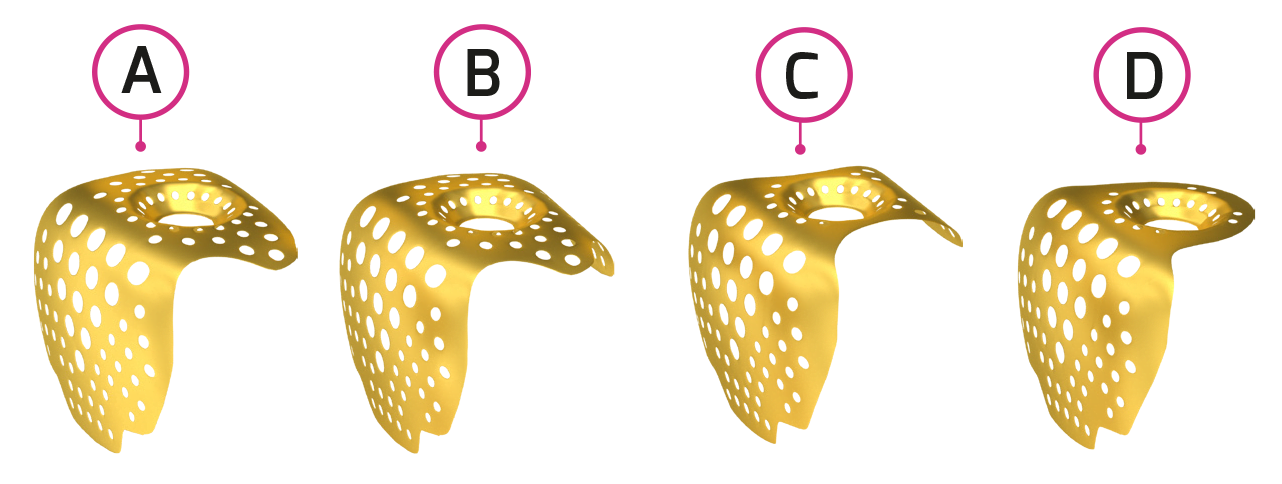
The use of 2D flat titanium meshes carries a higher risk in terms of outcome, as manual cutting can produce sharp edges that may irritate the mucosa, potentially leading to membrane exposure. This cannot occur with 3D titanium meshes. The pre-formed shapes cannot cause irritation, thereby minimising the risk of rejection and enhancing alveolar bone regeneration around the implant. BIONIKA 3D Builder plates provide straightforward application — at the time of placement, the mesh can be secured with the implant cover screw, eliminating the need to purchase additional components.
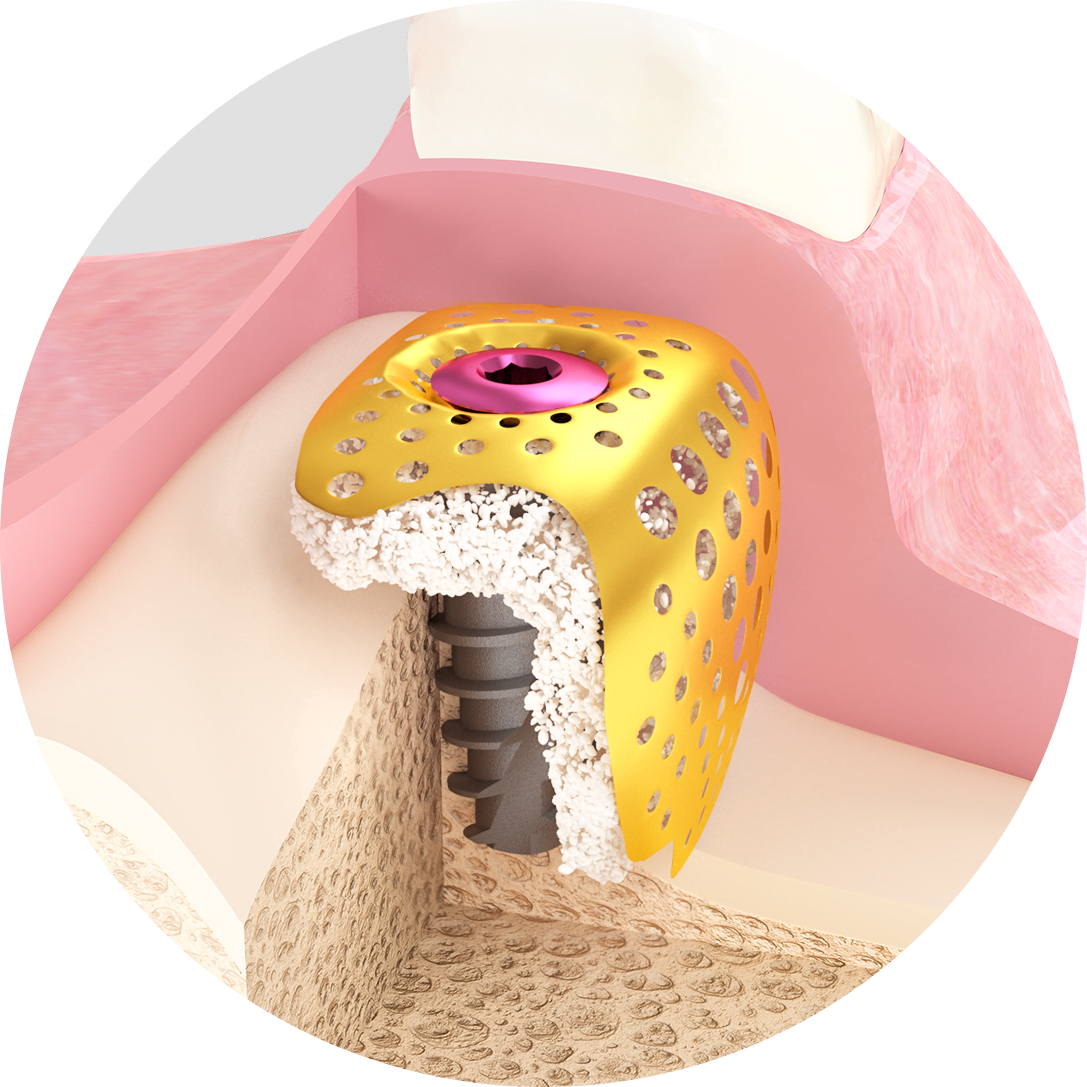
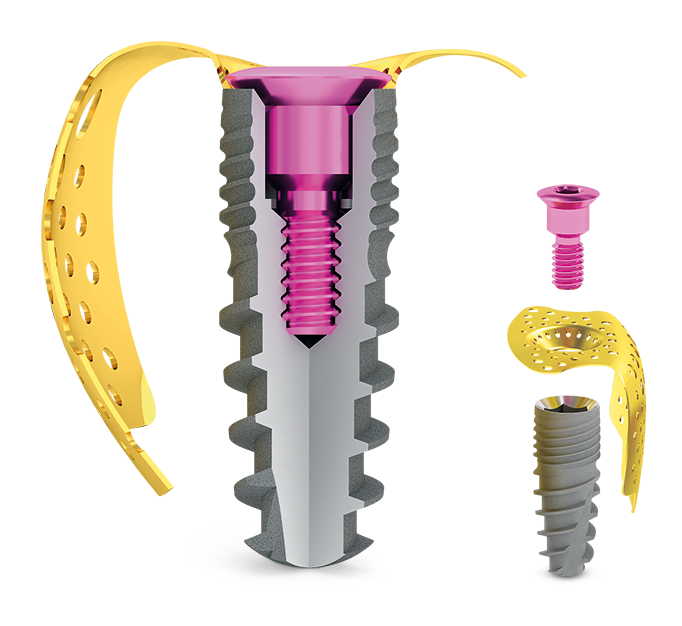
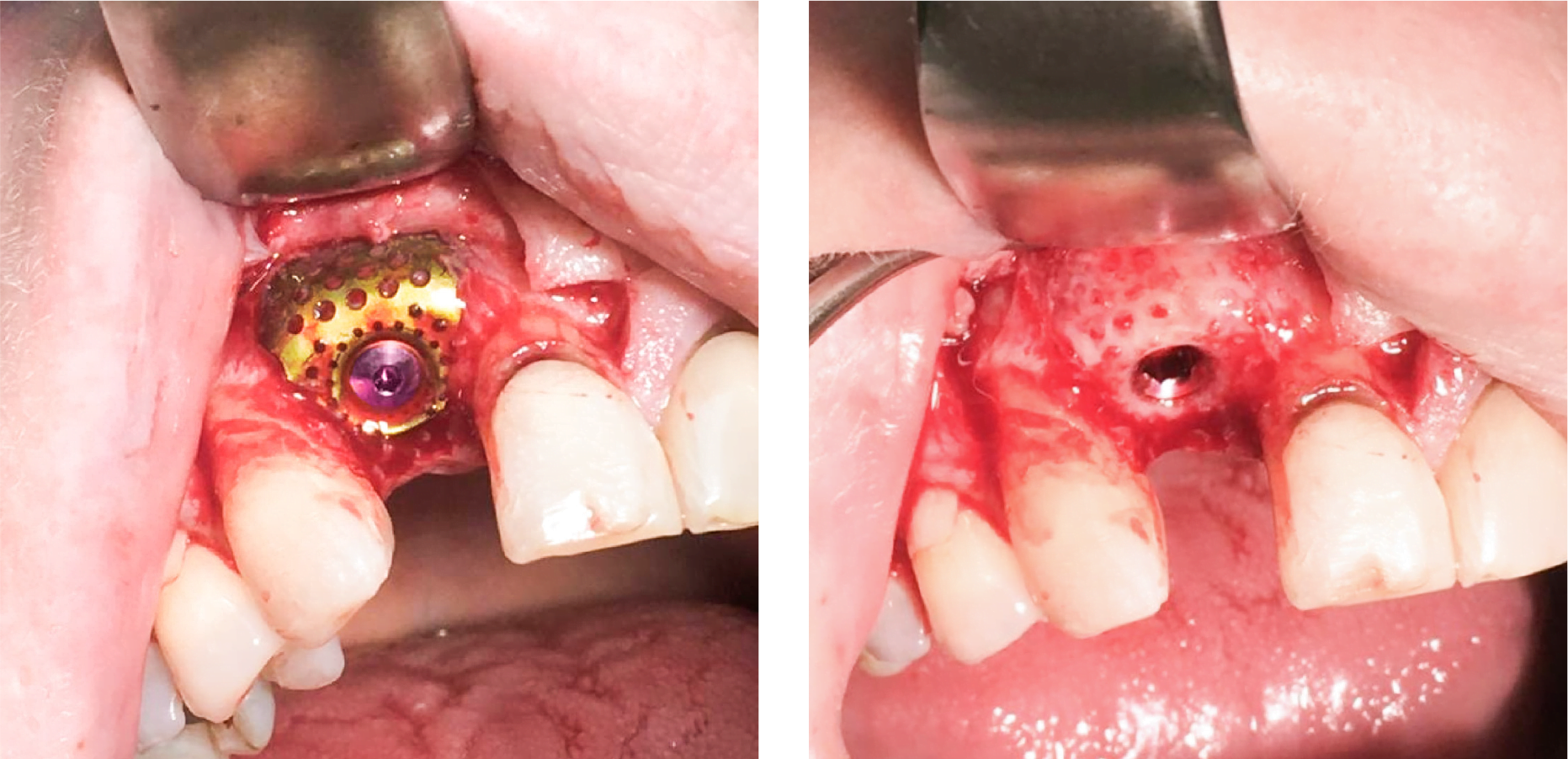
Thanks to its embossed design, the titanium mesh enables effective bone augmentation up to 1 mm above the implant. It can also be removed without irritation. The 3D Builder allows the integrated implant to be positioned at crestal level after mesh removal, using autogenous cancellous bone chips.
Summary
The BIONIKA 3D Builder titanium mesh has been used by our partners for more than a year with great satisfaction. Over this period, it has been demonstrated that, thanks to the mechanical properties of our titanium meshes, they are highly effective for bone regeneration compared to collagen membranes. They provide sufficient rigidity and adequate space-maintaining capacity to prevent deformation caused by external pressure and to block soft tissue ingrowth. They can therefore be used successfully even in cases of larger bone defects.
The 3D Builder titanium mesh was developed to simplify the work of our partners. Its application is exceptionally straightforward — no specialised instruments are required. The bone augmentation procedure can be performed simultaneously with the implant surgery. According to the current state of medical technology, this is one of the most effective methods for resolving bone deficiency, and we therefore recommend the BIONIKA 3D Builder titanium mesh to all implantologists.
Article information
- Author | Hajdú József
- Date | 2018. 04.13
- URL | www.bionika.hu