BIONIKA Milling Centre: Where the Future Meets the Present
e-BIONIKA News
Approximately 20% of the world's population is completely edentulous, and even more people have missing teeth. As a result, the demand for dental prosthetics continues to grow, driving the need to restore patients' teeth faster and more effectively. If you want your dental practice and dental laboratory to keep up with this increased demand, renewing your dental services is essential. Producing high-quality, precise prosthetics requires the use of the most modern, top-of-the-range equipment. Achieving a perfect micron-level fit is only possible by keeping pace with today's CAD/CAM technology.
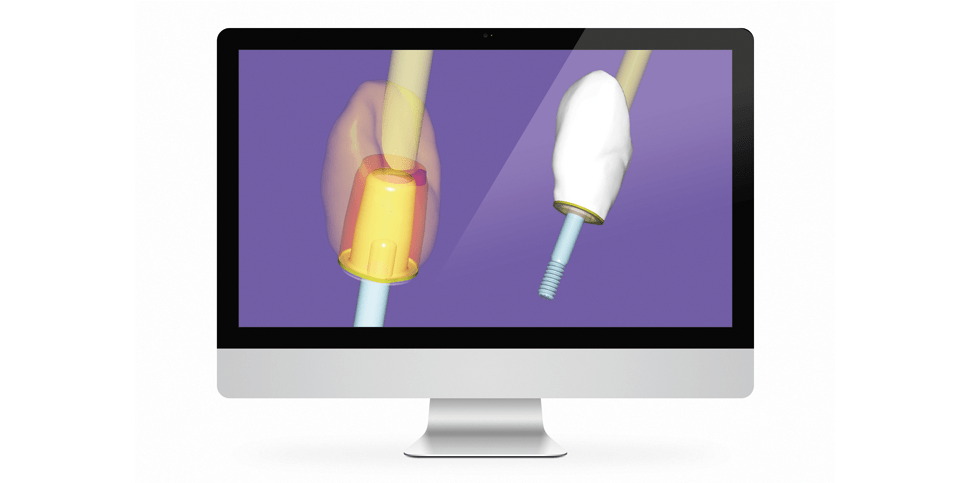
BIONIKA DentCam Milling Centre
In addition to dental implants, abutments, prosthetic components, instruments and instrument sets, as well as membranes and titanium meshes used for bone augmentation, BIONIKA established its own milling centre in 2016, named DentCAM, which enables the fast and flawless production of dental restorations. Our milling centre has been equipped with the capabilities offered by innovative CAD/CAM technology to meet all requirements, making us capable of producing the most precise, most natural-looking, and best-fitting dental prosthetics available on the market. Whether it involves crowns, custom abutments, implant-supported restorations, primary bars, onlay- or inlay-retained bridges, the specialists at the BIONIKA Milling Centre can realise every colleague's vision. Our wide range of services includes framework design, milling, grinding, finishing, and even the manufacture of custom implant abutments.
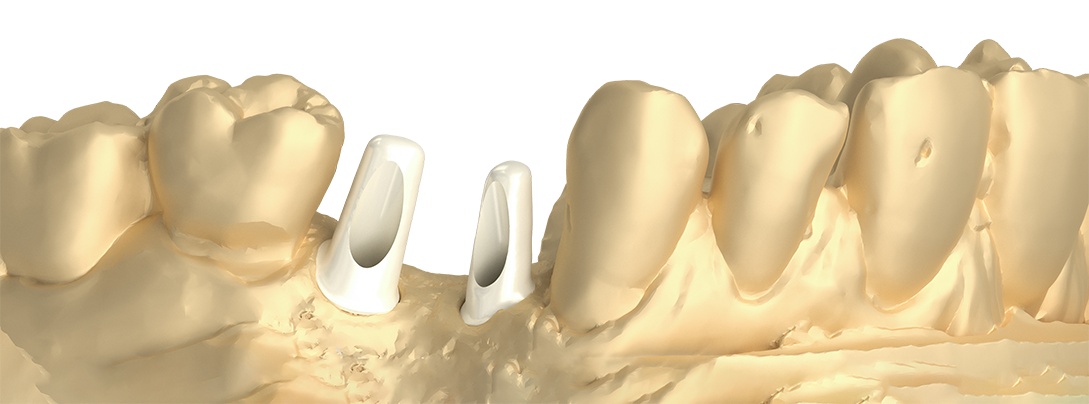
Acquiring and operating digital systems used in dental technology requires significant investment. Due to the high costs, many dental laboratories have remained with conventional methods. Fortunately, these laboratories no longer need to forgo aesthetic, precise, and affordable solutions, as the BIONIKA DentCam Milling Centre takes over the often time- and energy-intensive production of dental framework structures, freeing up our partners to focus on other activities. There is no need to invest in expensive equipment and machinery, as we guarantee the highest quality available — true to our core principle. Turnaround times are also reduced when working with us, as we supply the implants and abutments needed for successful outcomes on demand — including custom solutions. The DentCam Milling Centre is not merely a conventional dental laboratory; it is a high-precision industrial CNC machining centre that enables far more precise and detailed work than traditional methods. The dental frameworks produced by our specialists comply with the requirements of the ISO 13485 quality management system, by which BIONIKA Medline Kft.'s manufacturing base stands out among market players as a facility audited by an independent third party. Our products are manufactured exclusively from high-quality raw materials. Accordingly, we work only with reliable materials whose quality and conformity are certified by the manufacturer and which comply with the applicable standards and regulations for biocompatible materials.
Bionic Dental Restoration in Focus
If you do not have time for the labour-intensive production of dental frameworks, or lack the appropriate technology, choose the services of the BIONIKA DentCam Milling Centre — where you receive superior-quality restorations and can dedicate your remaining time to achieving perfect aesthetics.
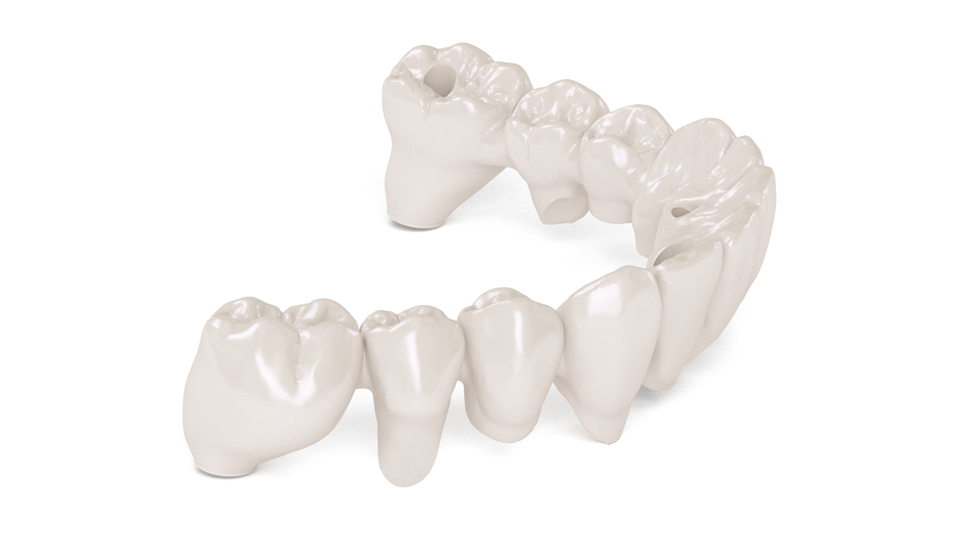
ZIRCONIA
This material is easy to mill and offers outstanding aesthetic appearance. It is the best solution for metal-free dental restorations. It does not cause allergic reactions in patients. Thanks to its high strength, full-arch bridges can also be fabricated from it. It effectively eliminates the unpleasant and harmful galvanic effects associated with metals.
PEEK
Experience shows that dentists, dental technicians, and patients alike favour this semi-crystalline thermoplastic polymer, as it offers excellent wear resistance and stability while being easy to shape — making it an outstanding framework material for fixed or removable dental prostheses.
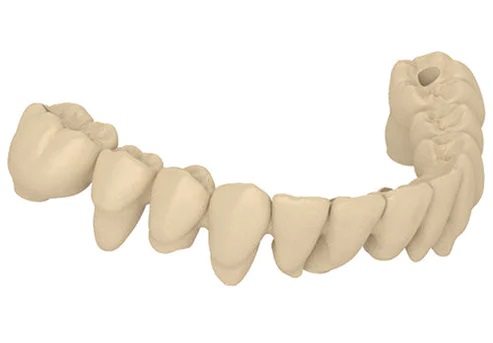
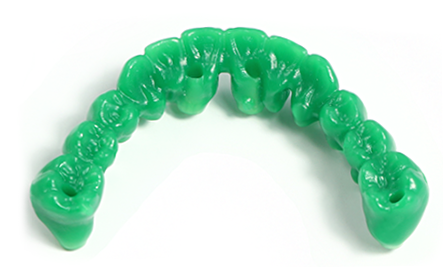
Modelling Wax and Plastic
CAD/CAM technology is well suited for producing computer-designed dental prostheses, as well as working with modelling wax used for casting patterns or plastic intended for temporary prostheses.
Case Presentation
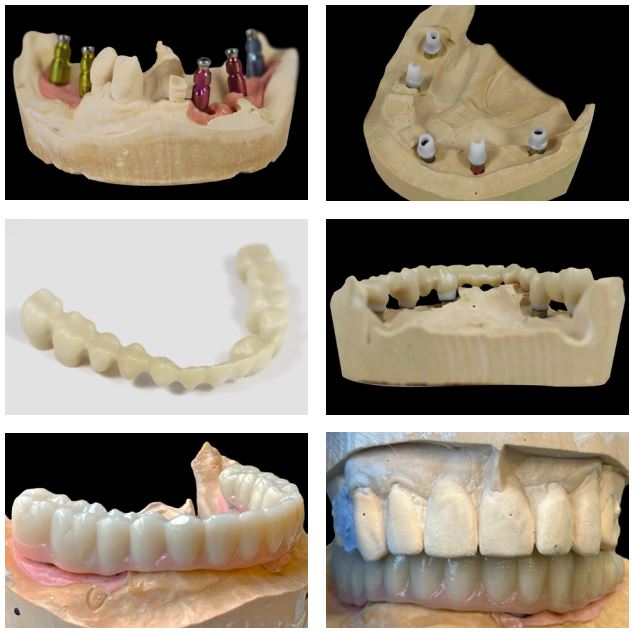
Over the past several years, numerous dental frameworks of various types have been produced at the BIONIKA DentCam Milling Centre. Every case is different, ranging from straightforward to highly demanding tasks. In this article, we present step by step the production process of a zirconia bridge fabricated for one of our partners.
As background information for this case, it is worth noting that a total of five implants were placed in the patient's mandible during treatment. Once the closed-tray impression had been taken, the articulated plaster models were also prepared and sent to our milling centre by post. Our partner, who engaged the services of the BIONIKA Milling Centre, entrusted us with the fabrication of a mixed-retention full-arch bridge that connects to the osseointegrated implants via zirconia abutments, in addition to resting on the patient's existing prepared stumps. The five implants that had been placed in the meantime were fitted with titanium bases manufactured by us, thereby eliminating potential complications associated with zirconia abutments bonded directly to the implant. After fitting the appropriate titanium bases into the model, we selected our own manufactured zirconia pre-forms for them, aligned according to the respective angular correction. Following the established procedure, the titanium bases were sandblasted and bonded to the zirconia abutments. Once the bonding cement had set, the now-bonded titanium bases were reinstalled in the model, and parallel grinding was commenced under continuous water cooling.
Since high-gloss objects cannot be scanned by a 3D scanner, the relevant areas of the model and the abutments were sprayed with scan spray. The project was then created in the ExoCad software we use, where we precisely marked the edentulous areas and the positions of the abutment teeth. After the data were entered, the software automatically compiled the detailed scanning strategy. The stumps and scanbodies were scanned individually to achieve a more accurate three-dimensional representation.
The bridge was subsequently designed based on the 3D models. At the outset, the margins of the die shoulders had to be identified precisely to ensure correct crown seating, and the occlusion of the teeth was established using the antagonist model. Since the bridge was designed to be supported by five abutments, particular attention was paid to the shape and thickness of the connectors between the bridge units to ensure structural integrity. Once the three-dimensional form of the bridge had been finalised, the physical fabrication followed, carried out using a five-axis VHF S2 machine and its proprietary software. To accomplish this, the 3D model had to be positioned on the digital layout of a 16 mm thick zirconia disc, and the appropriate machining strategy had to be selected.
To prevent potential warping during sintering, zirconia stiffeners were applied from both the lingual and palatal directions, to which the bridge units and crowns were also secured. The precise parameters were then entered into the VHF software, which automatically calculated the tool paths according to the 3D model. After the CNC programme had been generated, the machine executed the milling operations.
The raw zirconia bridge, together with its stiffeners, was then removed from the disc. A colouring liquid was selected to match the tooth shade specified by the partner, and the surface of the finished bridge was coated with it. It is important to ensure that if the colouring liquid pools on the surface of the zirconia or inside the crowns, it should be gently blotted away, as during sintering it can affect the accuracy of the crown, thereby creating additional work for the technician finishing the bridge. The finished workpiece was then placed in the sintering furnace, where it was evenly exposed to the heat emitted by the heating elements. After the 10-hour process was complete, the stiffeners were removed from the sintered full-arch bridge, and the lingual pins were finished. Finally, the completed bridge framework was tried on the plaster model, and once everything proved satisfactory and optimal, the finished framework was delivered to our partner, who applied the ceramic veneering. We are pleased to report that the patient has since remained satisfied and happy to have regained the joy of carefree chewing and smiling.
Article information
- Author | Hajdú József
- Date | 2023.06.09.
- URL | www.bionika.hu