Colour Marketing and Its Psychology
In General and in the Field of Dentistry
e-BIONIKA News
The primary goal of colour marketing is to attract the attention of potential customers to a given product, service, or brand and to evoke positive emotions in them. Colour marketing is used across numerous fields, including product merchandising, packaging, advertising, websites, and corporate logos. Colours influence the emotional state of consumers and play a significant role in purchasing decisions.
Dentists generally choose colours that align with the values and personality of their own brand. Colours are considered important in dentistry as well, as they also help put patients at ease.
Different colours carry different meanings. For example, red symbolises energy, passion, and strength, while blue generally conveys trust, stability, and reliability. So why is BIONIKA's colour blue?
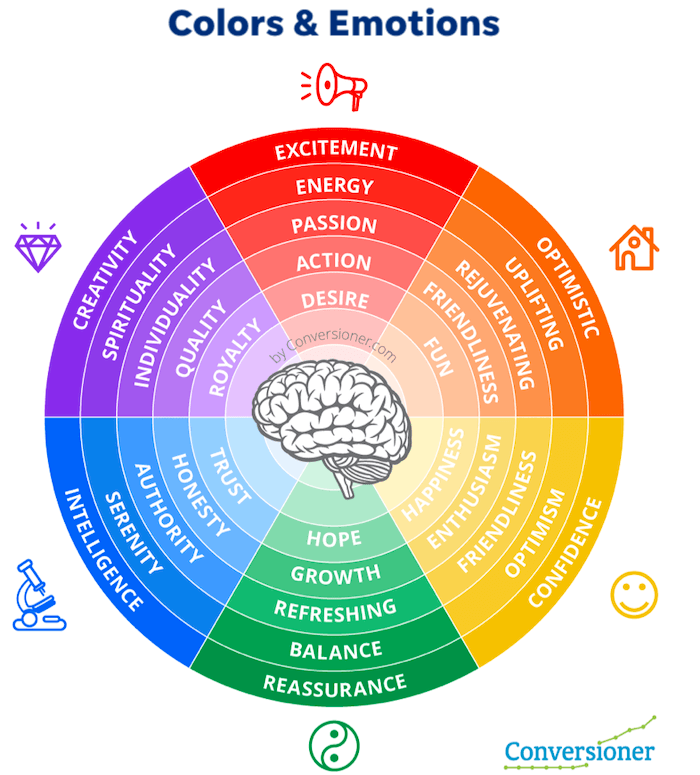
Source: Conversioner, 2014
Colours and Their Effects on Our Emotions
The use of colours depends greatly on the industry, target audience, and brand, but their emotional effects and most common applications can be broadly outlined as follows:
Red
The colour of energy, passion, strength, and love. It attracts attention, heightens emotional responses, stimulates appetite, and increases the likelihood of impulse purchasing. In the business world it is frequently used to capture attention and enhance impact. Red is most commonly seen in restaurants, food stores, and car dealerships.
Orange
The colour of energy, creativity, and enthusiasm. Orange has a positive effect on emotions while also increasing activity levels. In the business world it is often used to spark interest and draw attention. It is a frequently used colour in the food industry — for example in fast-food restaurants, snack bars, and patisseries — as it stimulates appetite and impulse buying.
Yellow
The colour of joy, happiness, and cheerfulness. It stimulates the brain and increases alertness. Using it on websites or in stores can help visitors identify products more easily. In the business world it is often used to radiate optimism and a positive spirit.
Green
The colour of nature, harmony, and balance. It soothes emotions, improves alertness, and boosts productivity. In the business world it typically represents sustainability and environmental awareness. For this reason it is a frequently used colour in hospitals and institutions offering healthcare and wellness services.
Blue
The colour of trust, stability, and wisdom. It has a calming effect, reducing stress and tension. In the business world it is frequently used to convey reliability and professionalism. It is one of the most widely used colours in the business sector.
Purple
The colour of wealth, creativity, and mystique. It fosters emotional depth and spirituality. In the business world it generally represents premium quality, luxury, and creativity. It is extremely common in the promotion of luxury and premium goods, expensive jewellery, and watches.
Black
The colour of authority, power, and sophistication. Overuse, however, can create a dark and negative effect. In the business world it is frequently used to express luxury, elegance, and confidence.
White
The colour of innocence, purity, and goodness. At the same time, white conveys a cool, clean, and fresh impression. In the business world it generally represents minimalism and clarity. It is often used for healthcare products such as toothpastes, as well as in the food industry. Using white can help achieve a clean and professional appearance.
The Psychology of Colours in Numbers
- Colours can influence our first impression by up to 90%,
- People perceive colours differently depending on gender and culture,
- 35% of women and 57% of men stated that blue is their favourite colour,
- Only 1% of people consider a black product to be cheap,
- Heinz (mayonnaise) changed its colour and saw revenue increase by 23 million dollars.
It is also worth reading the article by Oner, Ozdas and Kazak (2017), who wrote about how colour preferences between adults and children develop during dental treatment. Rather than changing the colour of the practice itself, they altered the colour of the mouthwash used for rinsing. Interestingly, the following results emerged from a study involving 503 participants:
- Adult men were far more excited and interested in coloured mouthwashes than children.
- Women and children did not favour coloured liquids, preferring the clear variety instead.
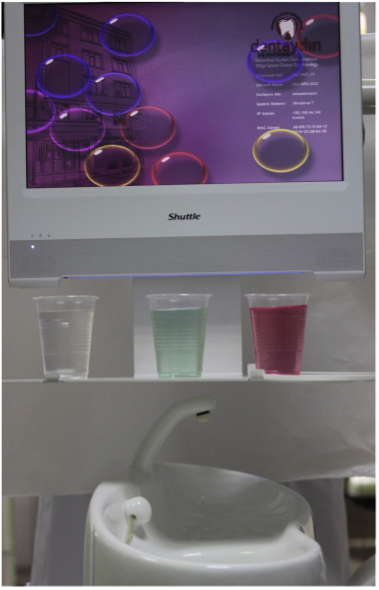
Source: Oner, Ozdas and Kazak, 2014
Ready for a Fun Challenge?
The colour coding of BIONIKA implant systems is designed not for psychological effect but primarily for differentiation.
Which colour do you think corresponds to which diameter? Test your knowledge with our BIOLEVEL implant system!
The extra narrow ø3.0 mm diameter, ø2.75 mm platform BIOLEVEL implant is ideally suited for bone structures significantly narrower than average and for the long-term retention of removable prostheses.
The narrow ø3.25 mm diameter, ø3.00 mm platform BIOLEVEL implants were developed for patients with a bone structure narrower than average.
The standard, ø3.75 mm and ø4.25 mm diameter, ø3.5 mm platform BIOLEVEL implant covers 75% of all cases encountered. This type is recommended for patients with an average bone structure.
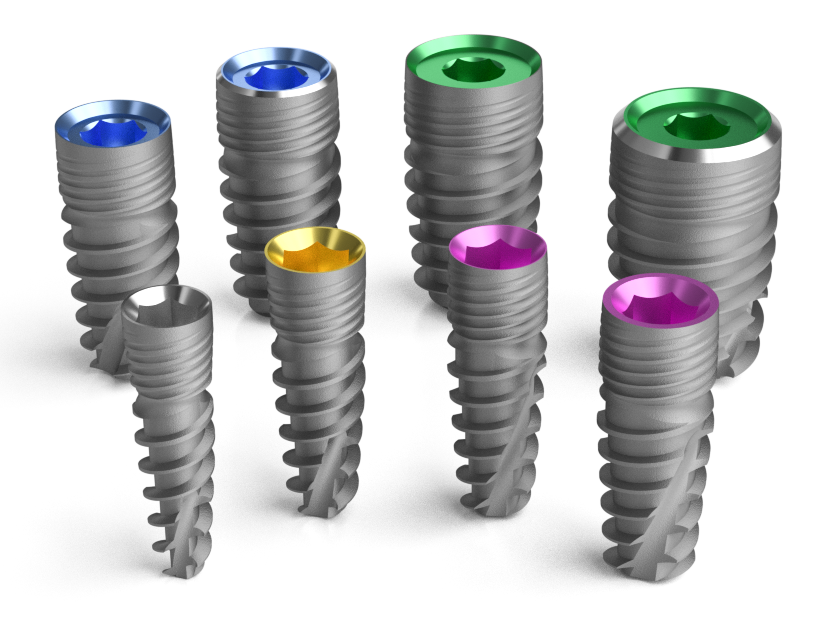
The wide, ø4.75 mm and ø5.25 mm diameter, ø4.50 mm platform BIOLEVEL implant is primarily suited for patients with greater-than-average bone volume.
The extra wide, ø6.00 mm and ø7.00 mm diameter, ø5.7 mm platform BIOLEVEL implant is ideally suited for above-average bone volume, for the long-term retention of prostheses under normal occlusal loading.
What Else Should You Know About the BIOLEVEL Implant?
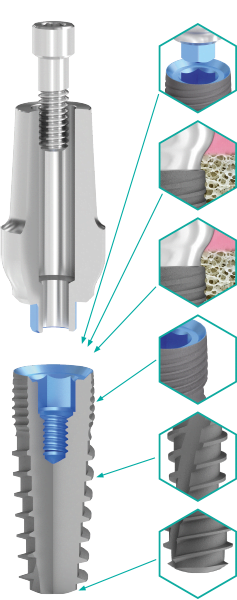
Key Features of the BioLevel Implant System:
Connection: Cone & hex - The combined conical and hexagonal geometry ensures a perfect fit.
Cortical Level - The implant's long-term success is significantly improved when the coronal margin is placed at or below the cortical bone level.
Platform switching - The diameter of the abutment connection is smaller than the outer bone-anchored portion of the implant. Bone can grow over the coronal margin of the implant.
Spirally micro-grooved surface - The micro-grooved spiral surface acts as a significant load-bearing element. The self-locking thread structure and cycloidal thread profile ensure a micromotion-free state and rapid osseointegration.
Anatomical root form - Thanks to the taper, large pitch, thread depth, and self-locking, self-tapping design of the implant thread, it has a bone-condensing effect and can — with appropriate care — be loaded immediately.
Rounded implant tip - Facilitates minor directional adjustments during implant insertion.
Article information
- Author | Hajdú József
- Date | 2022.04.14.
- URL | www.bionika.hu