Dental Innovation at BIONIKA
Implantation Without Bone Grafting, or Both Together
BIONIKA Medline Kft., as a research, development, and manufacturing company, focuses its 2017 innovative activities on bone-deficient cases in dental and oral-surgical implantology.
Key guiding concepts from current results and future plans:
1. BIONIKA systems developed for implantation without bone grafting
1.1. Short implants
1.2. Narrow implants
2. BIONIKA instrument systems developed for bone grafting
2.1. Titanium membrane mesh range
2.2. Instruments for bone transplantation
3. Bone grafting and implantation in a single step
1. Implantation Without Bone Grafting
1.1. A typical case for implantation without bone grafting is when 5–6, or possibly 7 mm of bone is available vertically in the posterior region of the jaw.
Bone resorption poses a particularly serious risk to the jaw in the molar region. This is generally the most challenging situation in implantology, especially when bone grafting is to be avoided. Experience shows that even with 4–6 mm of bone thickness, placing a short implant is worthwhile — and although success is not guaranteed at 100%, adequate osseointegration can provide stable support as part of a multi-unit bridge. Prior to further development, the shortest element of the BIONIKA CortiLog base system — compatible with the CamLog system — was 9 mm. In many cases this proved too long, so at the request of clinicians, BIONIKA developed the CortiLog Short solution, available in 6 mm and 7 mm lengths. Its primary distinguishing feature compared to the base system is the shorter tube-in-tube connection. It was designed with a mixed external thread structure consisting of a self-compressing epsilon thread and denser micro-threads of equal pitch and multiple leads. Calculations indicate that selecting a diameter of 5 mm or 6 mm yields notably high stability. Not only the bone dimensions but also the quality characteristics significantly influence success. A critical factor may be the load per unit surface area. Experience confirms that the biological interface medium — the bone socket, which due to its geometric appearance can be called the "BIOKOSÁR" (bone basket) — is the fundamental factor that can override all other considerations, even with the best intentions. Cases of bone deficiency therefore require the utmost care.
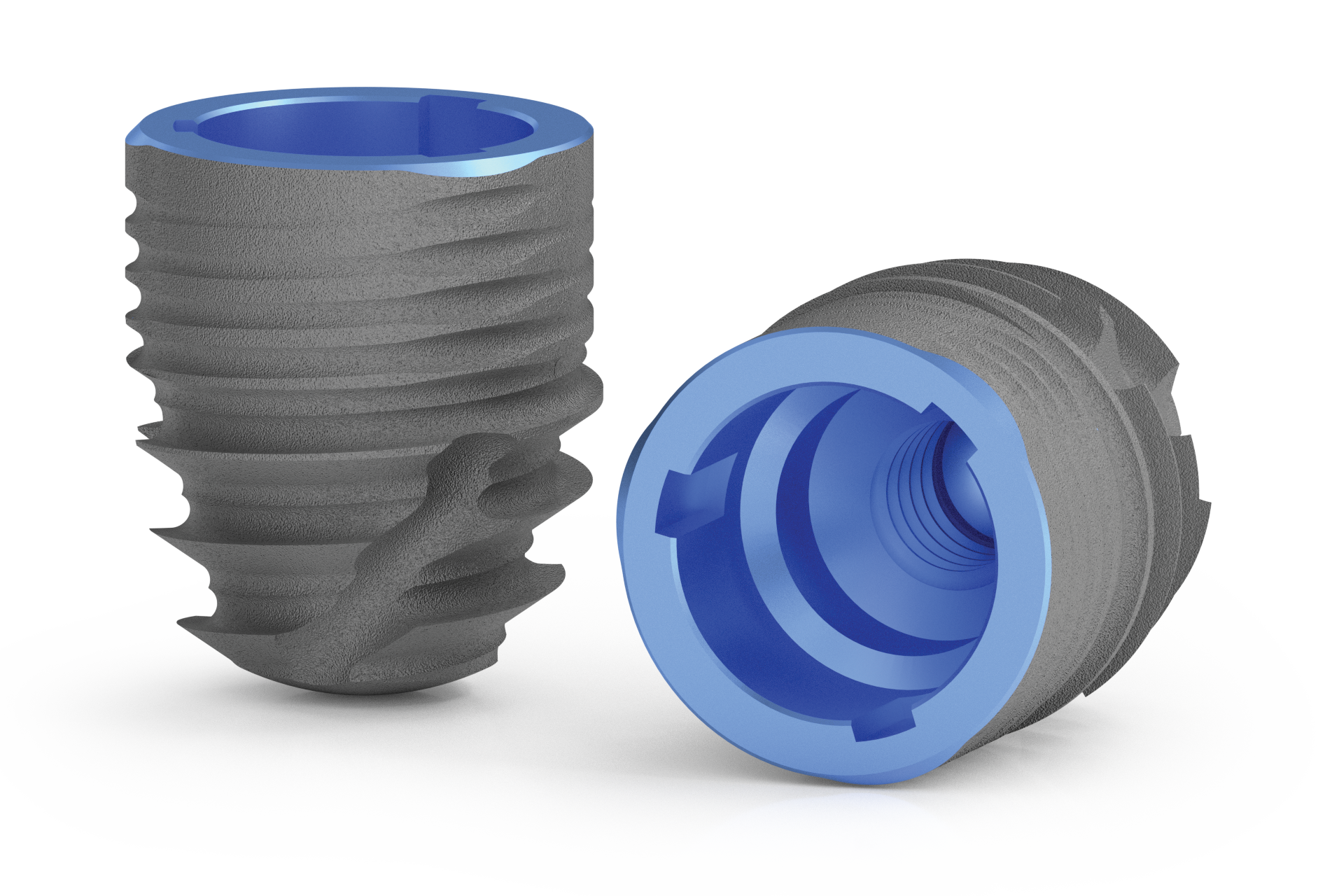
BIONIKA can also manufacture short implants for other implant systems to address bone-deficient cases. This is a frequent request when only 4–5 mm of bone height is available and the implantologist wishes to place the short implant as an intermediate support element in a longer bridge.
1.2. Use of narrow implants without bone grafting
Today, most implant systems offer a solution for placing implants in thin "blade bone" without bone grafting, using narrow implants with a diameter below 3.3 mm. In such cases, load-bearing capacity relies on the cortical wall. The contribution of the cancellous bone structure is minimal.
This purpose is also served by so-called mini implant systems, which are predominantly single-phase ball-head geometries — such as our Nanoplant system. Recently we also developed variants that, in diameters from 1.8 mm to 3.3 mm, support not only ball-head retention but also Torus-head (Locator-type) retention, cemented restorations, and screw-retained prostheses such as Multi-Unit abutment solutions — all now available within the Nanoplant implant system. These new developments provide bone-deficient patients with the same clinical advantages that are achievable with standard-diameter implants.
The disadvantage of single-phase mini systems is the deformation resulting from wear of the ball-head and Locator-type head components, which over time leads to functional irregularities. To overcome this drawback, we previously developed the narrow Bioplant Bicortical implant design in diameters of 1.8 mm, 2.3 mm, and 2.8 mm, and subsequently advanced it further into the new "HYBRID" system.
2. The BIONIKA Bone Grafting Instrument System
Experience confirms that increased loading leads to bone resorption, and that a near-resting state supports implant integration and the beneficial remodelling of the bone socket. Experiments to improve bone socket quality using various synthetic and allogenic, as well as autologous bone materials have been ongoing for many years.
BIONIKA has developed numerous instruments to support clinicians undertaking bone grafting procedures, helping them achieve successful outcomes.
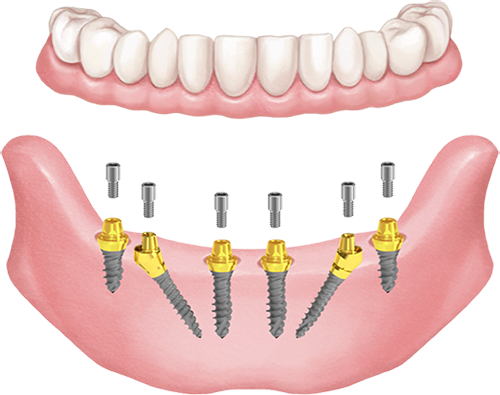
The "HYBRID" Implant System provides long-term replaceability of wear components, as it is a two-phase mini system that interchangeably incorporates all abutment types used in standard implant families. For example, even in cases with thin bone, the popular and cost-effective screw-retained prosthesis on 4 implants and the reliable full-arch restoration on 6 implants are no longer out of reach.
2.1. Titanium membrane mesh range
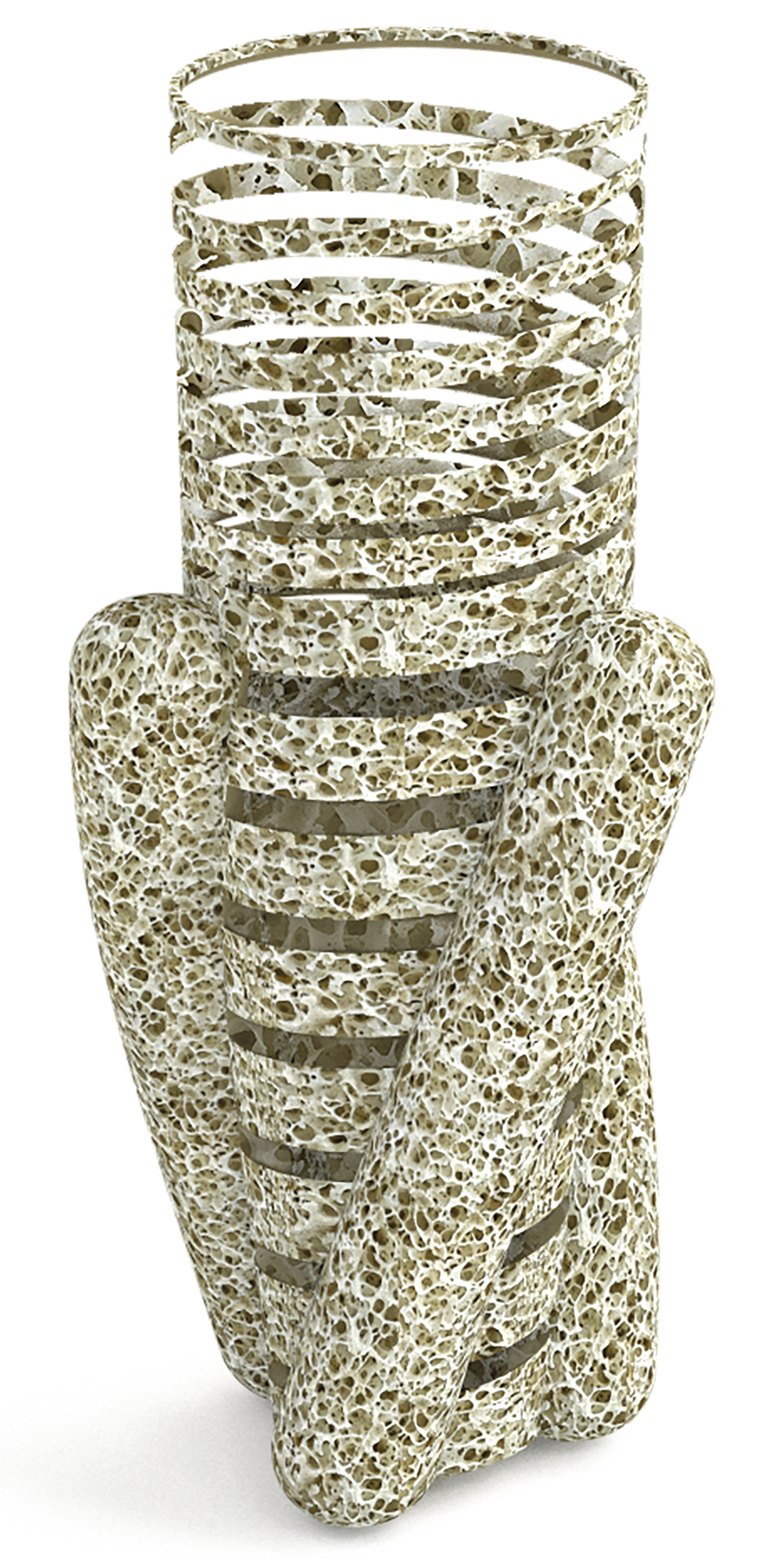
Natural and synthetic bone grafting materials require protection during the integration period. For this purpose, we developed titanium meshes — so-called membranes — in various sizes and in very thin gauges of 0.02 mm, 0.1 mm, and 0.2 mm.
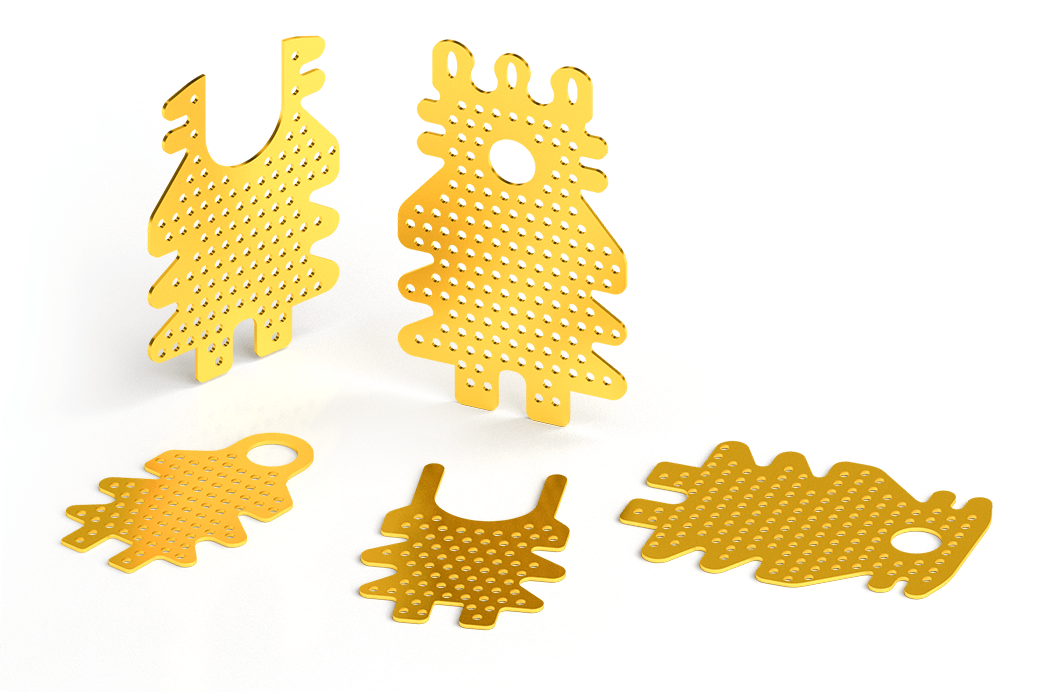
The perforated, lattice-structured membranes are available in various shapes and sizes.
- Flat mesh sheets can be trimmed to size with surgical scissors.
In addition, factory pre-cut specialty shapes are also available for specific clinical indications. - The membranes can be secured with titanium rivets using a rivet insertion instrument.
We have developed several types of membrane rivets, from which clinicians may select according to the complexity of the procedure:
· Flat-head rivet
· Threaded rivet with internal hex
· Cross-head, self-tapping tapered rivet-screw
2.2. Instruments for Bone Transplantation
In cases of extensive bone loss, bone transplantation may become necessary. The standard approach involves harvesting a bone block from the iliac crest or the jaw and transferring it to the bone-deficient site to achieve the required result.
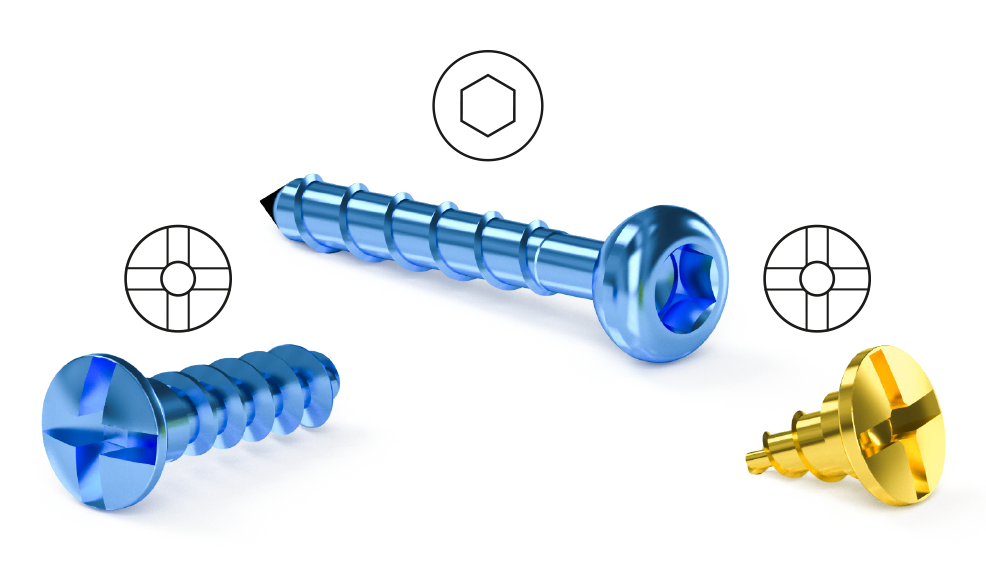
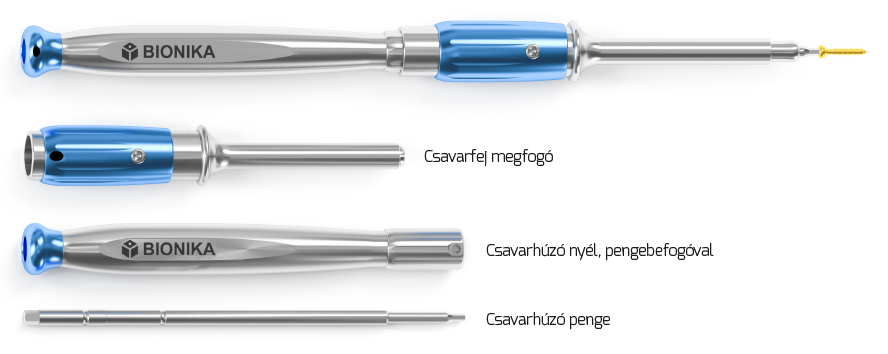
More recently, there are also reports of bone blocks produced from donor bone using CAD/CAM technology based on CT imaging. BIONIKA contributes to successful bone block surgeries by developing and manufacturing the screws required for bone block fixation, as well as the screwdriver instruments and complete kits needed for their insertion.
3. Bone Grafting and Implantation in a Single Step
It is a sound and logical objective to minimise the surgical burden on the patient. That is, whenever possible, consecutive procedures should be combined into a single session — in this case, bone grafting and implantation. With this goal in mind, we developed the new generation of titanium meshes, which screw directly onto the implant and provide secure protection for the bone graft.
Article information
- Author | Hajdú József
- Date | 2018.08.03.
- URL | www.bionika.hu