Minimally Invasive Procedures in Dental
Implantology
The modern trend in dental implantation
e-BIONIKA News
What do we mean by a minimally invasive procedure?
A minimally invasive procedure refers to a surgical intervention that causes the least possible tissue damage. This philosophy represents a commitment and a choice available to the dental specialist, with the ultimate goal of sparing the patient's body.
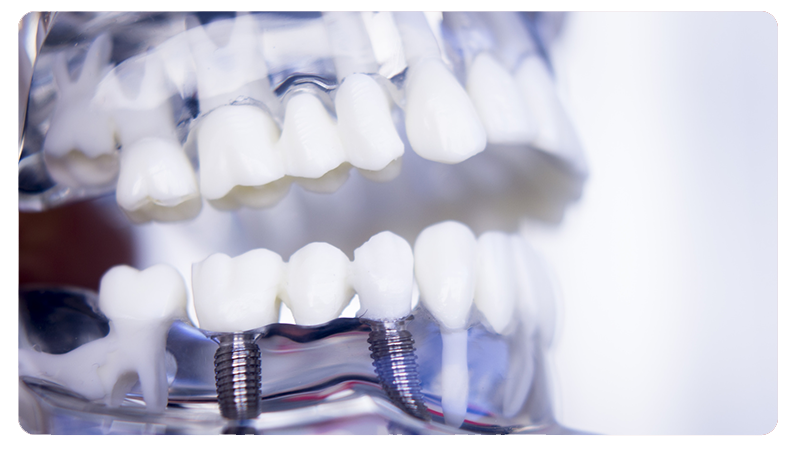
The trend now making its mark in dentistry has gained increasing ground in recent years. Collum and Deporter (2015) confirmed that very interesting directions are taking shape in the scientific community of dental implantology, many of which have been translated into clinical practice, allowing dentists, oral surgeons, and implantologists to apply these procedures on a daily basis.
The minimally invasive approach:
or "sometimes less is more"
In addition to aiming for the least possible tissue trauma during a minimally invasive procedure, the goal is also to reduce the number of steps involved and the overall costs.
Note: A minimally invasive intervention is neither easier nor requires less expertise than a conventional, traditional implantology procedure.
In every case, a comprehensive clinical assessment is required, the outcome of which often involves the BIONIKA Milling Centre.
Smile Design: Planning the prosthetic restoration process
We have prepared a Hungarian-adapted version of the prosthetic workflow chart by Collum and Deporter (2015), covering the replacement of a single tooth. The following critical decision points were identified:
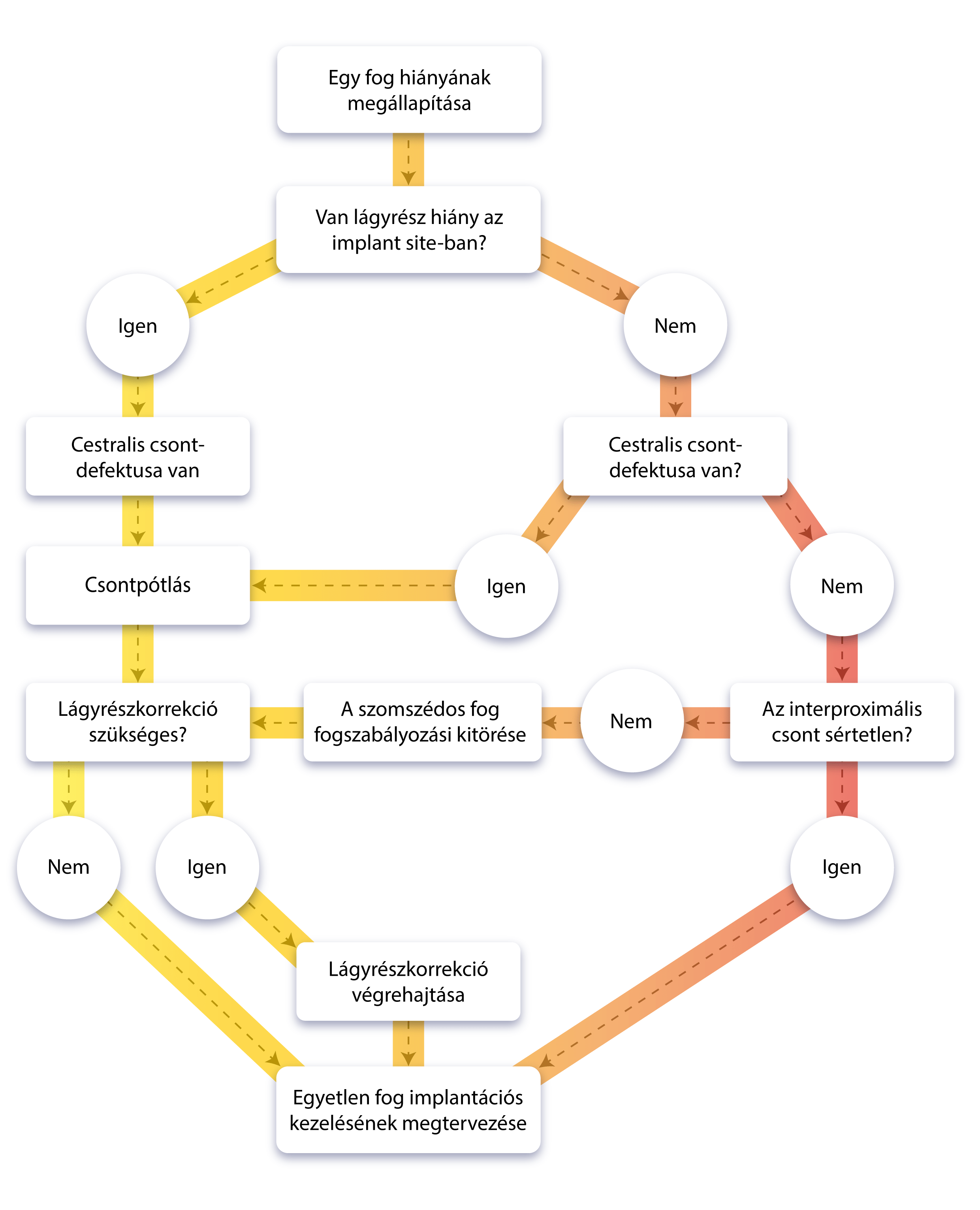
Is this how you plan your implantation process?
Let us know if you have a suggestion:
After planning, all that remains is to select the right implant.
BIONIKA's product range has exactly what you need!
The best of minimally invasive surgery: One-piece implants
Do you know what advantages BIONIKA's one-piece implants can offer?
- prosthetic versatility
- axis correction options
- high load-bearing capacity
- adaptability to gingival height
- solutions for preserving soft and hard tissue
- appropriate platform switching
- transgingival surgical technique requiring only a minimally invasive procedure (performable even with beginner-level dental and surgical experience)
- lower risk of surgical error (as mini implants do not penetrate as deeply into the tissue or jawbone)
- wide range of clinical applications (also suitable for patients with reduced bone volume)
- satisfied and happy patients
Source: Cullum, D., R., Deporter, D. (2013). Minimally Invasive Dental Implant Surgery. John Wiley & Sons, 2015. dec. 14.
Article information
- Author | Hajdú József
- Date | 2022.06.22.
- URL | www.bionika.hu