A NEW CUTTING-EDGE MATERIAL IN DENTISTRY?
PEEK capabilities at the BIONIKA DentCAM Milling Centre
e-BIONIKA news
New developments and trends emerging in dentistry require us to develop and manufacture our continuously evolving, state-of-the-art products using the most advanced cutting-edge technologies. In recent years, demand for aesthetic, all-ceramic dental restorations has grown explosively. As a result, CAD/CAM has become one of the most dynamically developing fields in dentistry. BIONIKA recognized the potential of CAD/CAM technology early and established the BIONIKA DentCAM Milling Centre, whose operations enable the reduction of turnaround times for implant-supported prosthetic work.
“Quality, Expertise, Cutting-Edge Technology”
We do not only manufacture implants, abutments and instruments — we also undertake the complete technical execution of full-arch rehabilitation within a closed system. Our industrial and dental CAD/CAM technology enables us to meet all the requirements of dentists and dental technicians, from design through to final production.
The experienced specialists at the BIONIKA Milling Centre design crowns, bridges, custom abutments, implant-supported restorations, primary copings, inlays and inlay-retained bridges of outstanding quality and excellent value for money.
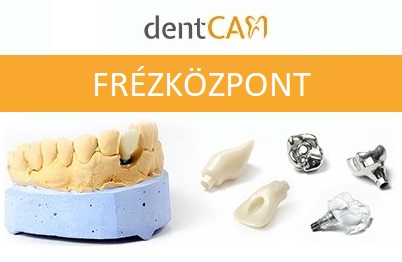
Did you know that even titanium is not the perfect dental material?
Today, the framework structures used in dental prosthetics are most commonly made of titanium and Co-Cr alloys. While these materials offer numerous advantages, they also have some drawbacks.
• Metal can corrode as a result of chemical reactions with the body’s enzymes and acids, which may lead to metal ion toxicity in the organism.
• The majority of research conducted to date suggests that titanium does not cause allergies; however, there are patients who have experienced allergic reactions following the placement of a titanium implant. These patients typically reported rashes, hives, eczema, swelling, necrosis and bone loss.
• Interestingly, bone particularly “likes” titanium alloy, and when removing an implant made from such a material, it can sometimes happen that the metal bends and fractures before it breaks free from the bone, which complicates the work of the treating specialist.
• A further disadvantage is that titanium has a grey colour, which can show through porcelain to some extent, and the metal margin may also become visible after gingival recession.
For these reasons, demand for metal-free restorations has emerged and grown considerably in recent years. To meet this demand, PEEK [poly(ether-ether-ketone)] has appeared and is now increasingly widely used — a material whose flexibility closely resembles that of natural bone.
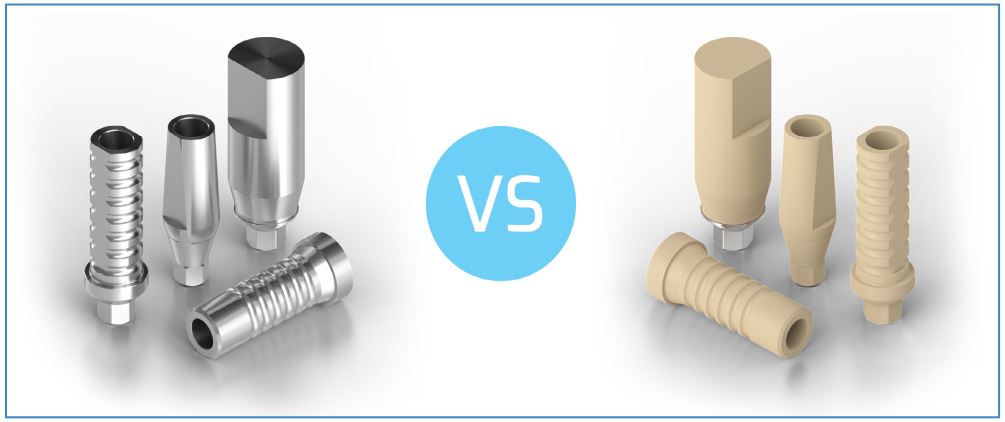
What will be the dental material of the future?
PEEK, discovered by John B. Rose and Philip A. Staniland, is used across a wide range of different fields thanks to its favourable properties — from bearings and pistons through to cable insulation. Notably, this first-class, high-performance polymer material has been used in the fabrication of prostheses since the 1980s. In dentistry, however, its use has only begun to spread in recent years. Owing to its advantageous material properties, it is also widely used in various fields of medicine, particularly in the manufacture of artificial cartilage, knee and hip prostheses, and heart valves.
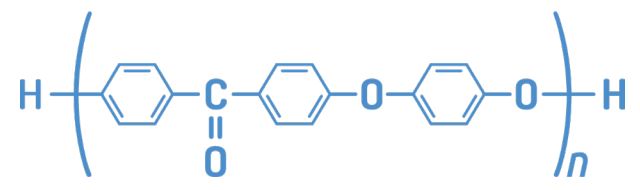
The chemical structure of PEEK.
Experience shows that dentists, dental technicians and patients alike appreciate this semi-crystalline, thermoplastic polymer, as it offers exceptional wear resistance and stability while remaining highly mouldable — making it an excellent framework material for both fixed and removable restorations.
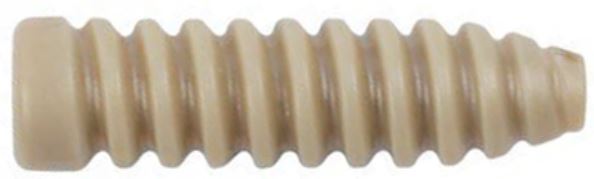
Implant made from PEEK
PEEK as the ideal dental material
Based on the experience of researchers, thanks to its outstanding properties and future developments, PEEK is set to become one of the best materials in the field of dental devices in the years to come.
• Flexibility
PEEK qualifies as an excellent dental material because its crystalline structure provides high resistance, while remaining extremely flexible. Thanks to this flexibility, it behaves naturally in the mouth and stays resilient even after years of biting and chewing. Dental devices made from PEEK are able to retain their original shape even under continuous use.
• Mechanical properties
Compared to metal, PEEK is lighter and more comfortable for patients. An important characteristic is that it resists corrosion and maintains its original shape for several years without any degradation in quality.
• Aesthetics
PEEK integrates easily into the oral cavity, as during processing its naturally whitish hue can be customised and adjusted to the individual. Its aesthetic appearance makes even full-arch restorations look natural, so patients can speak, smile and eat with confidence.
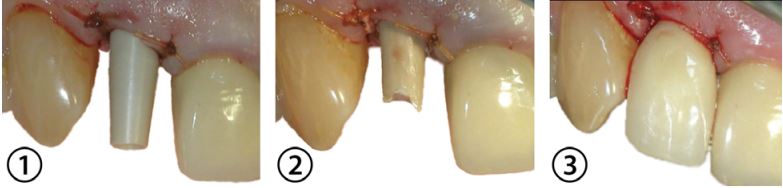
New temporary abutment for aesthetics and function
• Radiolucency
One of the key properties of PEEK is its resistance to gamma and X-ray radiation. X-ray imaging is critical for dental diagnostics, and PEEK contributes to enabling dentists to perform their work quickly and thoroughly.
• Biocompatibility
One particular advantage of PEEK is its high degree of biocompatibility. For this reason, it can be used with confidence in patients with metal allergies, as it causes no irritation whatsoever. Biocompatibility is an especially important consideration, since research shows that 15% of the population suffers from metal allergies.
• Taste neutrality
Unlike metal devices, PEEK is taste-neutral, meaning patients do not experience any unpleasant aftertaste in their mouth while wearing it.
• Machinability
PEEK is equally suitable for computer-aided design (CAD) and machining (CAM). In modern dentistry today, CAD/CAM enables specialists to manufacture shapes tailored to the individual anatomy of each patient. The ease of machining and shaping of PEEK facilitates the work of both dentists and dental technicians.
“PEEK is the music of the future — but we are already playing it today!”
In dentistry today, PEEK is used primarily for temporary prosthetic components, healing devices and gingival formers. Abroad, various experiments and tests are already well underway regarding the use of PEEK as a dental implant material; however, there are currently no reliable data on how PEEK behaves as a classical dental implant. Despite this, specialists predict a great future for PEEK and consider it conceivable that one day implants made from PEEK will be placed in patients’ mouths.
BIONIKA Medline Kft. has also recognised the potential of PEEK. We currently use this material for the fabrication of temporary implant abutments, scanbodies, copings and bridge frameworks, but you can rest assured that we will be welcoming our partners with innovative, state-of-the-art new products in line with the evolution of market trends.
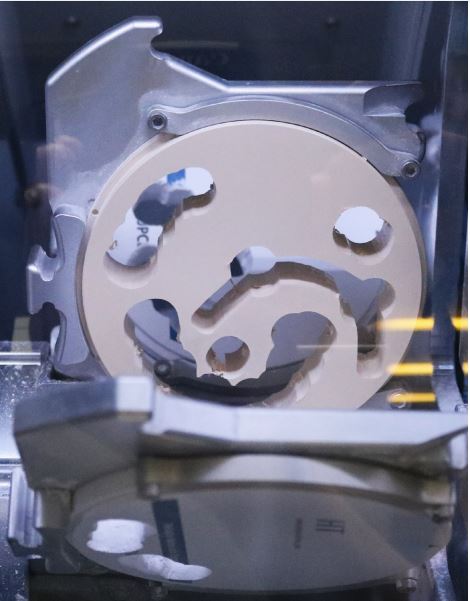
Milling a PEEK disc at BIONIKA
BIONIKA DentCAM Milling Centre — the best choice
•Our team delivers high-quality, excellent-value restorations in a short turnaround time, freeing up more of your time for aesthetics and other clinical priorities.
•No need to invest in expensive equipment and devices, as we already have the most advanced technologies at our disposal.
•We consider it essential that our products are made exclusively from quality raw materials, which is why we only use reliable materials whose quality and conformity are verified by the manufacturer’s material certificate, and which comply with the ISO 5832 international standard.
•The BIONIKA team knows no limits. Drawing on our professional expertise, we find professional solutions even for seemingly impossible cases.
•The Milling Centre manufactures frameworks for prosthetic work on all implant systems, ensuring the best value for money.
•By the time you would source the required implant abutment from abroad, BIONIKA can have not only the abutments but the complete finished restoration ready for you. Choosing the BIONIKA DentCAM Milling Centre can significantly reduce your turnaround time.
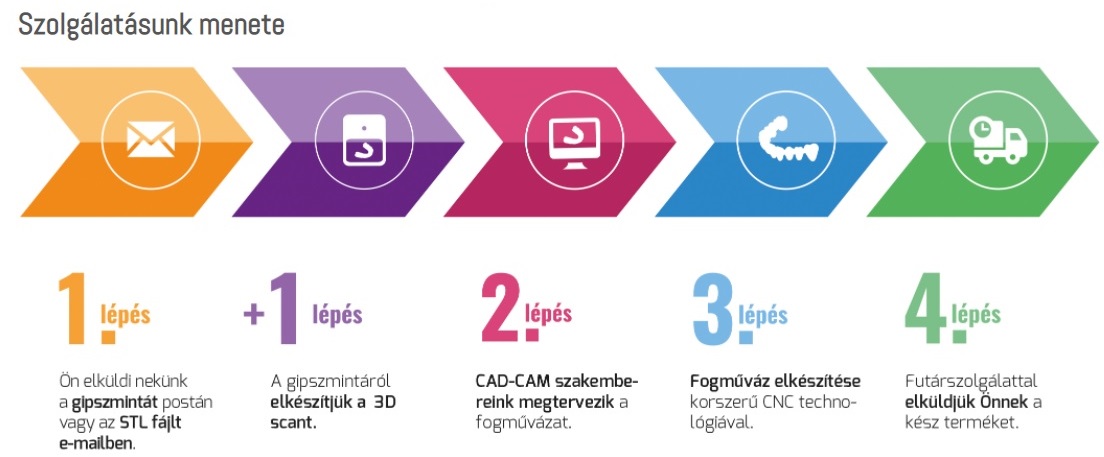
Looking to have a prosthetic framework made but lack the necessary technology, or simply want to save time?
The BIONIKA DentCAM Milling Centre takes over the time-consuming fabrication of prosthetic frameworks on your behalf.
Article information
- Author | Hajdú József
- Date | 2016.09.05.
- URL | www.bionika.hu