THE WONDER METAL OF INDUSTRY:
from the discovery of titanium to implant applications
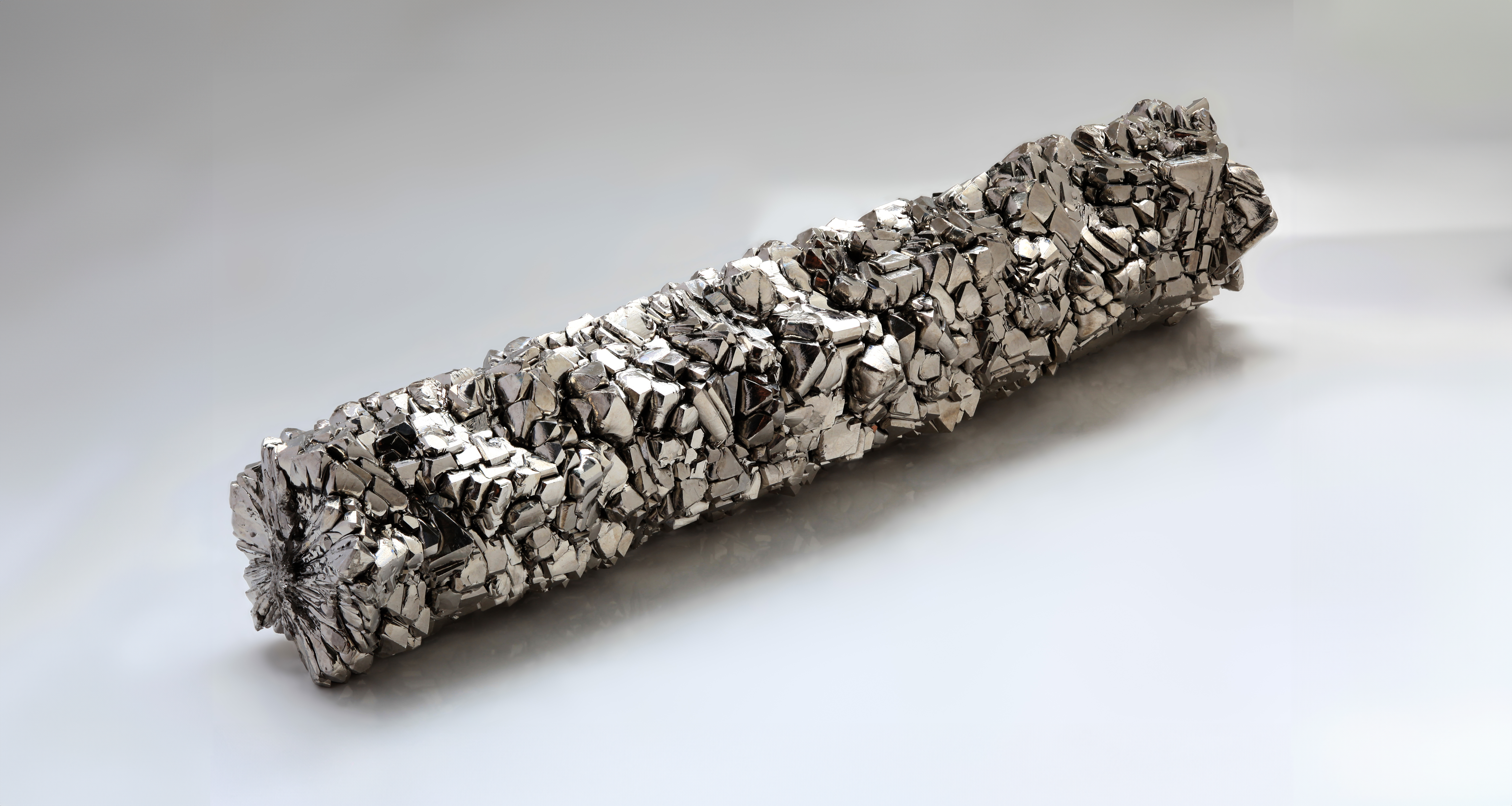
Titanium is one of the chemical elements of the periodic table. Its symbol is Ti and its atomic number is 22. As a transition metal, its extraordinary physical and chemical properties make it a fundamental material in many sectors of modern industry and technology. Despite its low density, this lustrous, silver-coloured metal exhibits outstanding strength and is particularly resistant to corrosion — even seawater, chlorine, alkalis, acids, and aqua regia are unable to damage it. These exceptional properties ensure that titanium is indispensable in the aerospace industry, aircraft manufacturing, medical device production, and numerous other high-tech sectors. The following article reviews the history of titanium's discovery, its industrial production methods, and presents its most important fields of application.
The history of the discovery and naming of titanium
The discovery of titanium dates back to the late 18th century, when William Gregor, an English clergyman and amateur geologist, found an unknown substance in 1791 in the sand of the Helford River in Cornwall. Using a magnet, he was able to extract a black material from the sand, now known as ilmenite. He removed the iron from the material using hydrochloric acid, but was unable to identify the remaining 45.25% white metal oxide. When he recognised that the unknown oxide contained a metal that did not correspond to any previously known element, Gregor presented his discovery to the Royal Geological Society of Cornwall and also published it in the German scientific journal Crell's Annalen. Independently of Gregor's work,
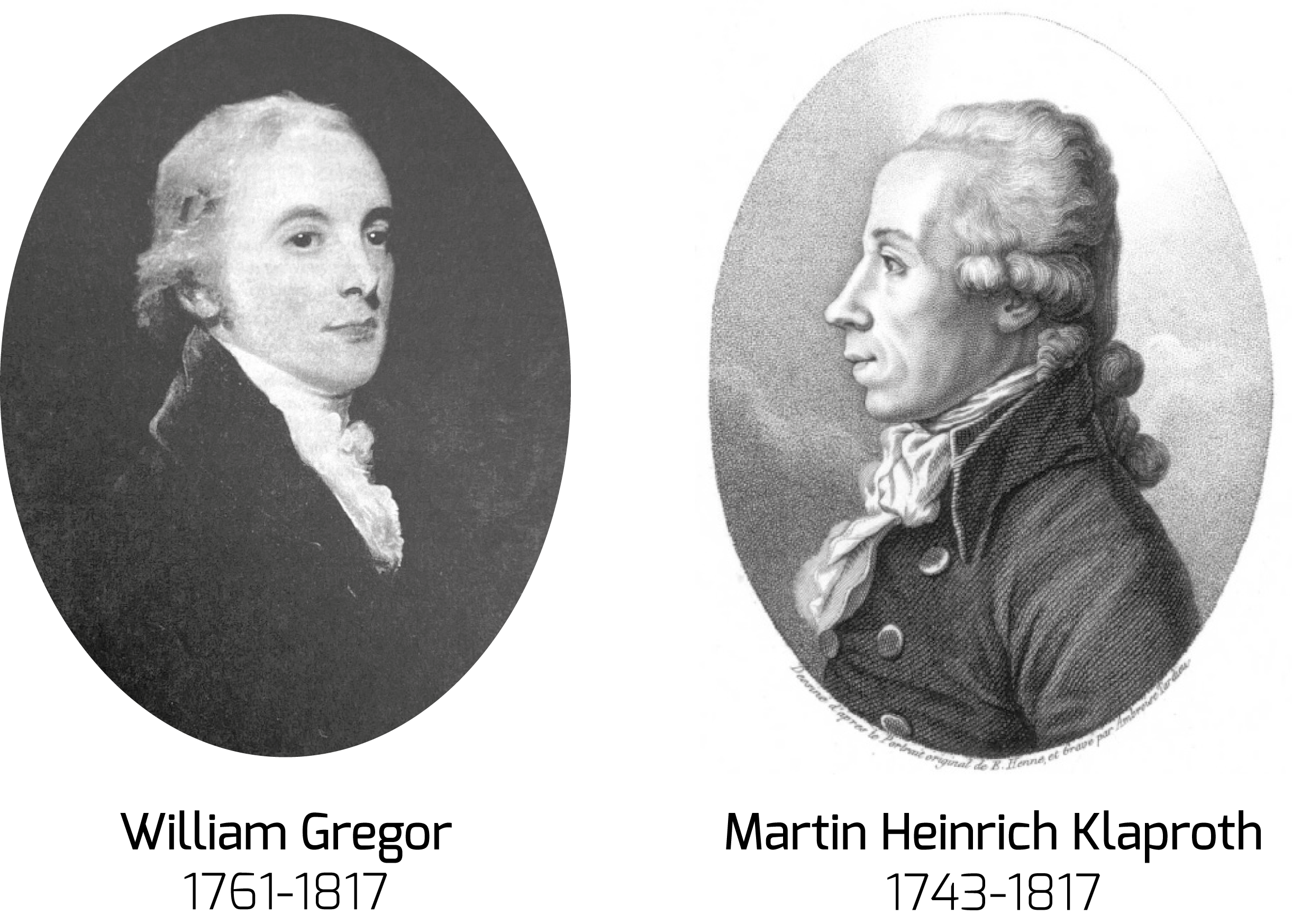
In 1795, Martin Heinrich Klaproth, a Prussian chemist, also isolated an unknown oxide from rutile originating from Bojničky (Upper Hungary), in which he discovered a new element. Klaproth named the new element after the Titans of Greek mythology, alluding to the material's strength and resilience. The name titanium has since remained a symbol of mythological power and toughness. Klaproth later proved that the substance discovered by Gregor also contained the same new element.
Occurrence and extraction of titanium
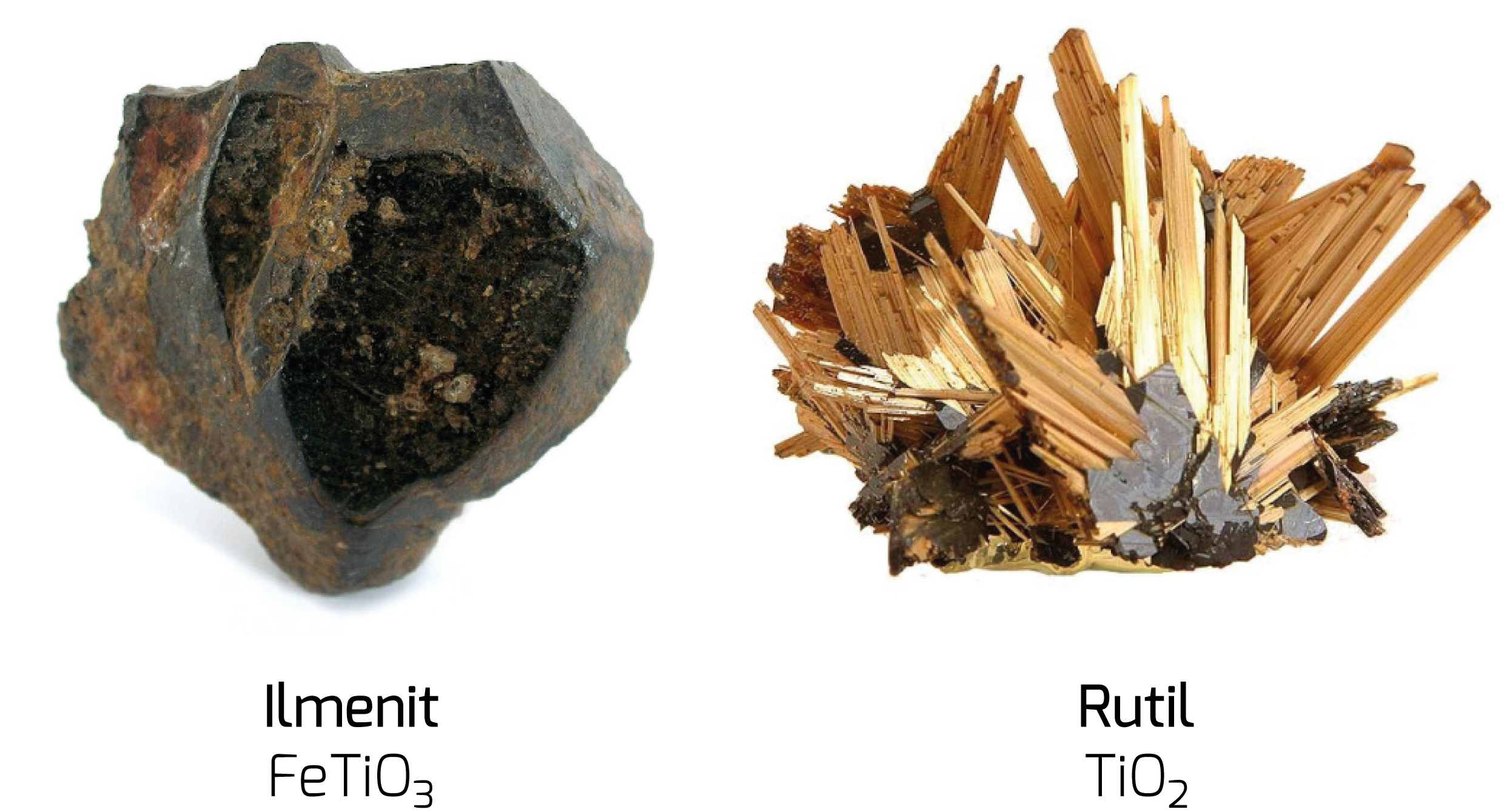
Among the most significant minerals of titanium are ilmenite (FeTiO₃) and rutile (TiO₂), which are the main sources of titanium ores. Today these minerals are extracted in industrial quantities and prepared for subsequent stages of titanium production. However, the processing of titanium ores is a complex, multi-step procedure that presents considerable technological challenges.
Industrial processes for the production of pure titanium
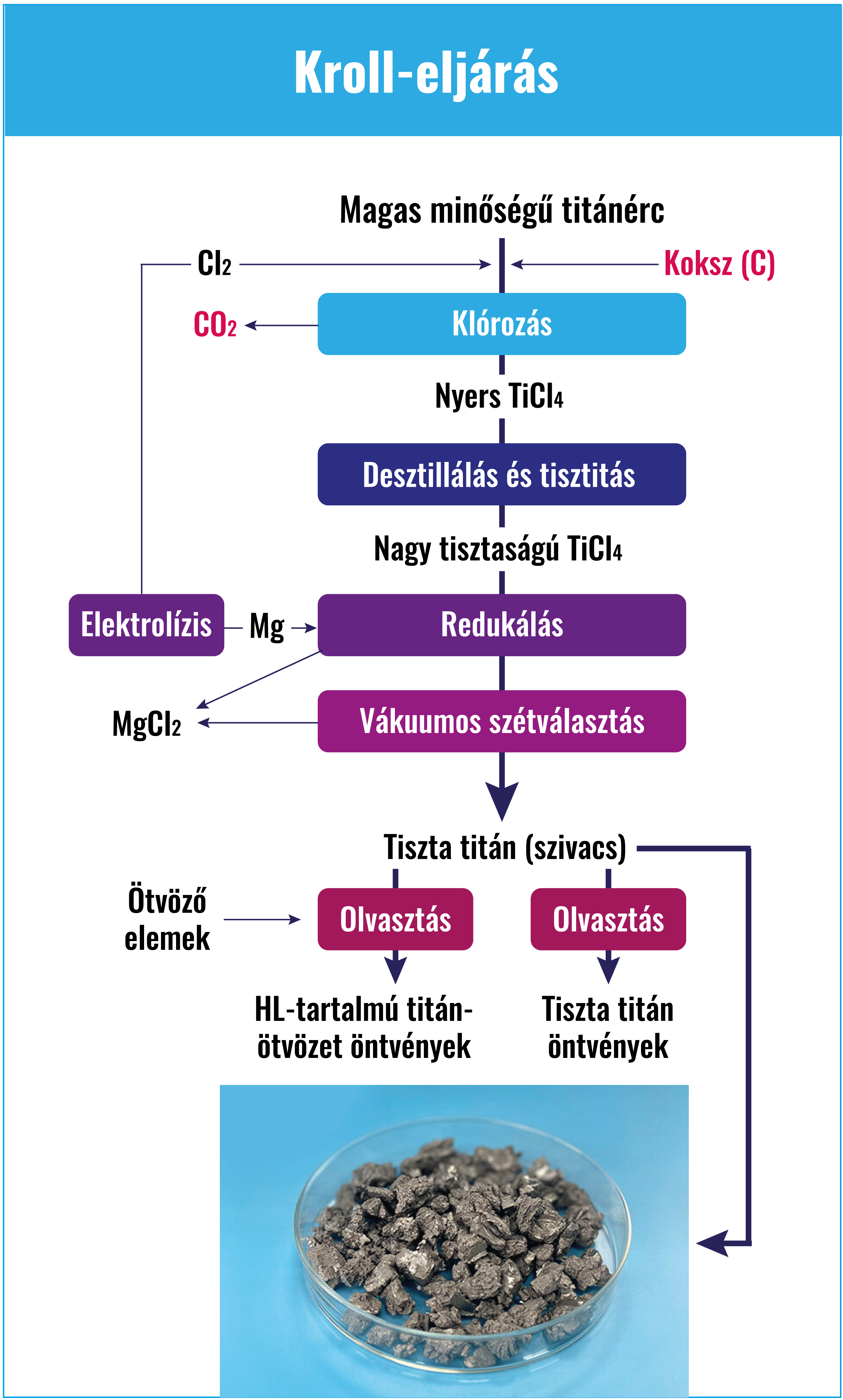
High-purity (99.9%) titanium was first produced by Matthew A. Hunter in 1910, in what the industry now knows as the Hunter process. The process involved reducing titanium tetrachloride (TiCl₄) with sodium (Na) to yield pure titanium. Although this process fundamentally revolutionised titanium production, it eventually became obsolete as titanium's economic importance grew, and was superseded by the Kroll process. Although research continues to this day in the search for a significantly more cost-effective solution, the Kroll process has remained the best-known and most widely used method of titanium production, despite its complexity and substantial energy requirements.
The steps of the process are as follows:
1. Mining and preparation of titanium ore:
The first step of the Kroll process is the extraction of titanium ores — such as rutile (TiO₂) and ilmenite (FeTiO₃). The ore is mined,
then cleaned and crushed by mechanical methods to prepare it for further processing.
2. Production of titanium tetrachloride (TiCl₄) (chloride process):
The prepared titanium ore is reduced with coke and then converted into titanium tetrachloride by chlorination.
In the case of ilmenite:
2FeTiO₃ + 7Cl₂ + 6C -> 2TiCl₄ + 2FeCl₃ + 6CO
In the case of rutile:
TiO₂ + 2Cl₂ + C -> TiCl₄ + CO₂
This process takes place in a high-temperature furnace, where chlorine gas and carbon react with the ore.
3. Purification of titanium tetrachloride:
The resulting titanium tetrachloride is purified by distillation to remove impurities such as iron chloride (FeCl₃) and other by-products.
4. Production of pure titanium from
titanium tetrachloride:
The purified titanium tetrachloride is then reduced with magnesium (Mg) to obtain metallic titanium. This reaction takes place at high temperature in the presence of a shielding gas such as argon, to prevent oxidation of the titanium:
TiCl₄ (g) + 2Mg (l) -> Ti (s) + 2MgCl₂ (l)
5. Further purification of titanium:
The crude titanium obtained as a result of reduction is in a solid, sponge-like state and therefore requires further purification. Purification is carried out by mechanical methods such as filtration or distillation. The sponge is removed from the titanium using a pneumatic hammer, then placed in a carbon-arc furnace where it is melted. The molten ingot is allowed to solidify under vacuum, but is frequently remelted several times to remove inclusions and ensure a homogeneous structure. These costly processes contribute to titanium's price being significantly higher — roughly six times that of stainless steel.
6. Further refining of the final product:
The produced titanium may undergo additional refining to remove any remaining impurities and ensure the desired properties of the final product. The pure titanium thus obtained is then used for various industrial purposes, such as the production of alloys and applications in the medical and aerospace sectors.
The use of titanium at Bionika
Titanium is an indispensable material for many industries, owing to its unique properties such as high strength, corrosion resistance, and biocompatibility. Its applications range from the aerospace and aviation industries through medical technology to the chemical industry and sports equipment manufacturing, ensuring the efficiency and reliability of modern technologies and industrial processes. Titanium also plays an increasingly prominent role in the industries of the future, where reliability, durability, and sustainability are becoming ever more important.
Classification of titanium
Titanium is classified into different quality grades, which are distinguished by purity and alloying composition. This classification allows the properties of titanium to be optimally matched to the various industrial and medical applications.
• Grade 1 titanium is the purest and most easily formed, offering exceptional corrosion resistance. Its outstanding formability and weldability make it highly versatile. It is used primarily in the manufacture of medical devices, as well as in the chemical industry for the production of various pipes, tanks, and heat exchangers.
• Grade 2 titanium is one of the most commonly used titanium grades, offering an excellent balance of strength, formability, and corrosion resistance. Although it is slightly inferior to Grade 1 in terms of purity and formability, it still has very good mechanical properties. It is used mainly in the chemical industry, food industry, medical devices, and in aircraft and marine components.
• Grade 3 titanium is a medium-strength variant that is stronger than Grade 1 and 2, yet still readily formable. This grade offers excellent corrosion resistance, particularly in acidic and marine environments, while providing greater strength than lower grades. It is used mainly for the manufacture of chemical processing equipment and medical
devices where a stronger material is required.
• Grade 4 titanium is the strongest of the four commercially pure titanium grades. It is highly resistant to corrosion, formable, and machinable. It is frequently used as a component in aircraft airframes and engines, as well as in chemical processing plants and in the pulp and paper industry. Its good corrosion resistance and biocompatibility make it the primary raw material for medical implants.
• Grade 5 titanium (Ti-6Al-4V) is the most widespread and widely used titanium alloy, offering an excellent strength-to-weight ratio, good corrosion and heat resistance, while remaining adequately formable. Due to these properties, it is increasingly used in the manufacture of sporting goods, aircraft, and medical devices.
Summary
The production of titanium is a complex, multi-step process. The Kroll process has made it possible to produce pure titanium, enabling it to become an indispensable material in many sectors of industry. The exceptional properties of titanium and its wide range of potential applications ensure that it will continue to play an important role in modern technology and industry.
Article information
- Author | Hajdú József
- Date | 2024.08.16
- URL | www.bionika.hu