Titanium and Its Alloys in Dental Implantology
e-BIONIKA News
Due to its light weight combined with high strength and outstanding corrosion resistance, titanium and its alloys have been indispensable materials in the aerospace industry since the 1950s. Titanium has numerous beneficial properties that have made it popular in dentistry, and particularly in implantology. BIONIKA has been applying and researching titanium and its future applications for several decades, and we consider it important to share with you the current state of scientific knowledge and expert opinion on titanium and its alloys.
Why Titanium?
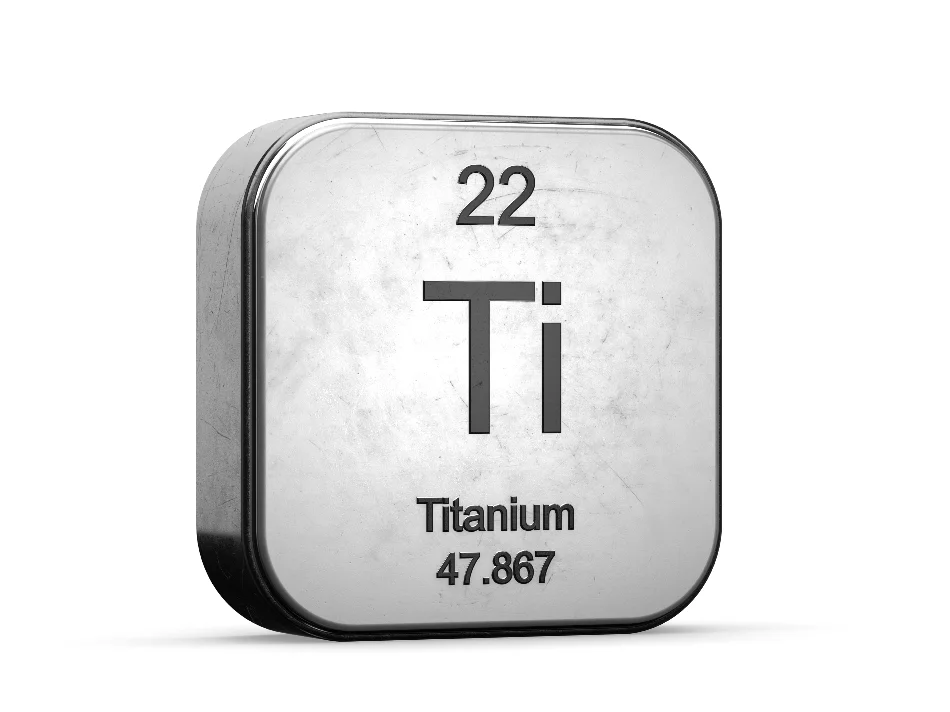
Titanium, with the chemical symbol Ti, is the fourth most abundant metal and the ninth most common element in the Earth's crust. The discovery of titanium dates back to 1791, yet it only came into industrial use in the 20th century. The most common titanium minerals are oxides, though it can also be associated with silicates and other metals. The largest titanium deposits are found in Brazil, Australia, Canada, Norway, South Africa, and Ukraine.
The primary applications of titanium are in the aerospace and chemical industries, and it is also frequently used in the manufacture of marine equipment. It is widely employed in medicine as well, including hip and knee prostheses, dental implants, bone screws, and plates used in skull fracture repair.
Few people are aware that the mining and production of titanium is an extremely costly and energy-intensive process, as the mineral can only be produced at very high temperatures, which is why the price of titanium is considerably higher than that of other metals.
Source: Azo materials, 2002
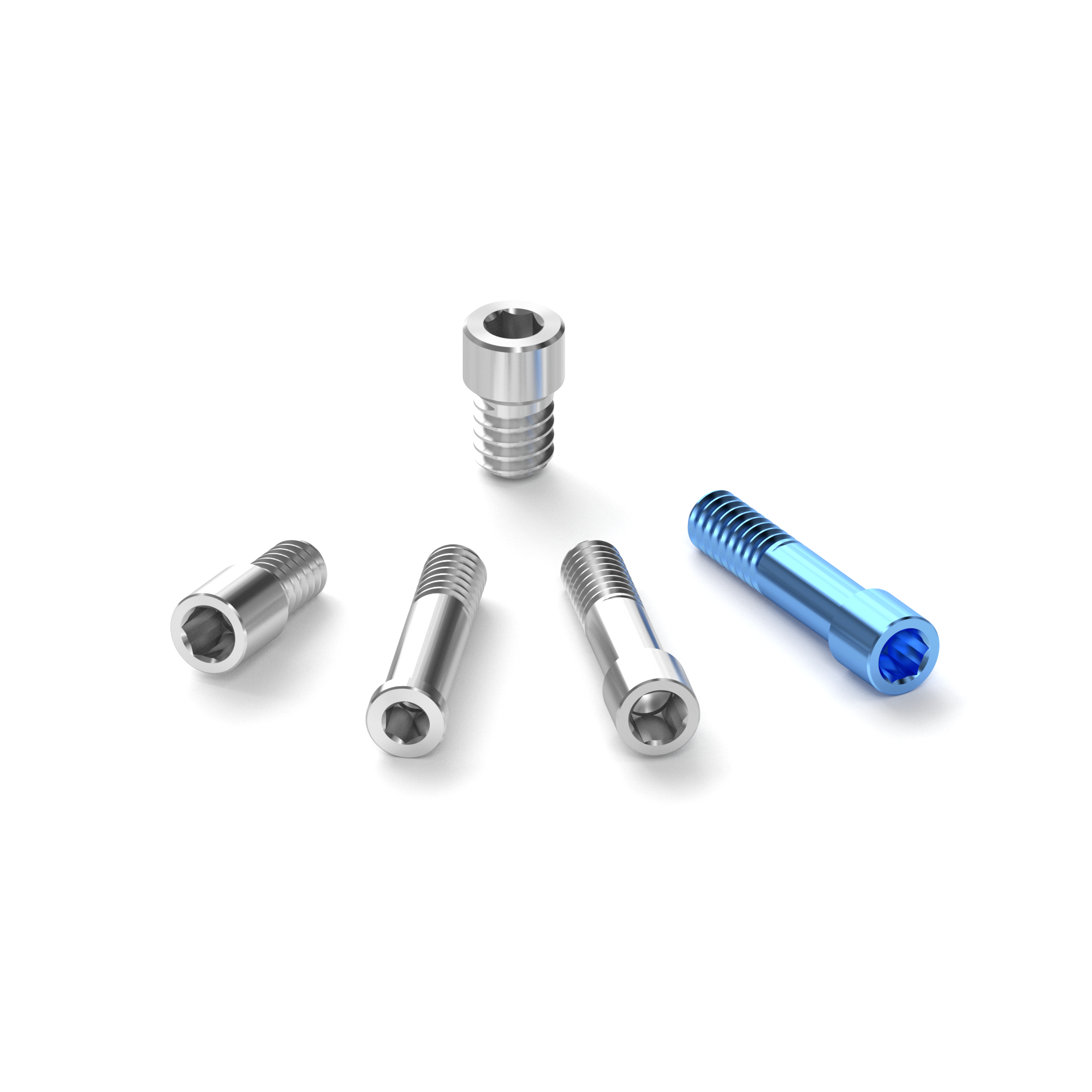
Titanium and Its Alloys
Titanium alloys contain alloying elements such as aluminium, nickel, chromium, etc., in order to achieve greater strength, corrosion resistance, and high-temperature performance.
The alloys are ideally suited for aerospace and space applications, including the manufacture of components for aircraft, spacecraft, satellites, and rockets, and are even used in bicycle manufacturing. They are also employed in the defence industry, the healthcare industry, the automotive industry, and in the production of sports equipment.
There are also specialised titanium alloys with specific properties, such as superconducting titanium alloys, which are exceptionally well-suited for the manufacture of electronic devices.
The production of titanium alloys is, similarly to titanium itself, an extremely costly process, owing in part to the high-temperature requirements and the specialised technological demands involved.
Special Physical Properties
Density
Titanium and titanium alloys have a low density, meaning they are very light compared to other metals. The density of pure titanium is approximately 4.5 g/cm³, while the most commonly used Ti-6Al-4V alloy has a density of 4.43 g/cm³.
Strength
Titanium and titanium alloys are exceptionally strong and rigid. The strength of the Ti-6Al-4V alloy can reach up to 1.1 GPa at elevated temperatures, which is approximately twice that of most aluminium alloys.
Elastic Modulus
Titanium and titanium alloys have a moderate elastic modulus, meaning they exhibit intermediate stiffness. The elastic modulus of the Ti-6Al-4V alloy is approximately 110 GPa, which is higher than that of aluminium alloys.
Thermal Expansion Coefficient
Titanium and titanium alloys have a very low thermal expansion coefficient, meaning they remain relatively stable in response to temperature changes.
Corrosion Resistance
Titanium and titanium alloys are corrosion-resistant, meaning they withstand oxidation and other chemical influences. This is why they are used in applications where corrosion can pose a significant problem, such as in aerospace, the healthcare industry, and the marine industry.
Biocompatibility
Titanium and titanium alloys are biocompatible, meaning they do not cause excessive immune reactions or other complications in the body when used as implants in dentistry, orthopaedics, or other medical applications. Among all currently known metals, titanium is the most biocompatible.
Electrical Conductivity
Titanium and titanium alloys are good electrical conductors, which is important in aerospace applications where electrical conductivity plays a significant role.
Surface Properties
Titanium and titanium alloys possess excellent surface properties, which can be further enhanced by various methods. Oxidised titanium and titanium alloys, for example, can be made extremely hard and wear-resistant.
Magnetic Properties
Titanium and titanium alloys have weak magnetic properties, which can be beneficial in electrical and electronic applications where magnetic interference may pose a problem.
Commercially Available Titanium Alloys
The discovery of titanium is credited to William Gregor, who first encountered this material in 1791 in Cornwall, England. Titanium takes its name from the Titans of Greek mythology. In 1940, William Justin Kroll developed the so-called "Kroll" industrial production process, which remains the method used for titanium production to this day.
Commercially pure titanium is available in both rod and ingot forms, in various grades. Titanium Grade 2 is an unalloyed material with high impact resistance, and is primarily used in valve manufacturing. Titanium Grade 4 resists a wider range of corrosive environments, making it a preferred choice in the medical technology sector. Titanium Grade 5 offers excellent biocompatibility and is therefore primarily used in healthcare for the manufacture of medical implants and instruments.

Source: GMK center, 2023
BIONIKA is committed to quality — right down to the raw materials!
Initially, BIONIKA (like other manufacturers) preferred higher-purity titanium; however, for reasons of mechanical strength, virtually all dental implants worldwide are now manufactured from Grade 4, Grade 5, or other alloyed titanium. The Grade 5 titanium used in the manufacture of BIONIKA implants offers the most favourable properties for dental implantology applications. Its appropriate purity ensures excellent biocompatibility, combined with outstanding strength characteristics. For the prosthetic components of our implant systems, we use alloyed, high-strength Grade 5 titanium; however, certain abutments are also available in Co-Cr material, and our plastic abutments in POM or PEEK materials.
The quality of our CE-marked products is guaranteed by design, manufacturing, and quality management processes in accordance with harmonised European Union regulations. BIONIKA Medline Kft. operates under the EN ISO 9001 and EN ISO 13485 quality management systems. We provide a long-term guarantee on the products we manufacture. Following implant placement — and to reduce the risk inherent in the osseointegration process — we offer a replacement guarantee for any of our implants that are lost or dropped within one year of purchase, regardless of cause-and-effect relationships.

Article information
- Author | Hajdú József
- Date | 2022.11.13.
- URL | www.bionika.hu
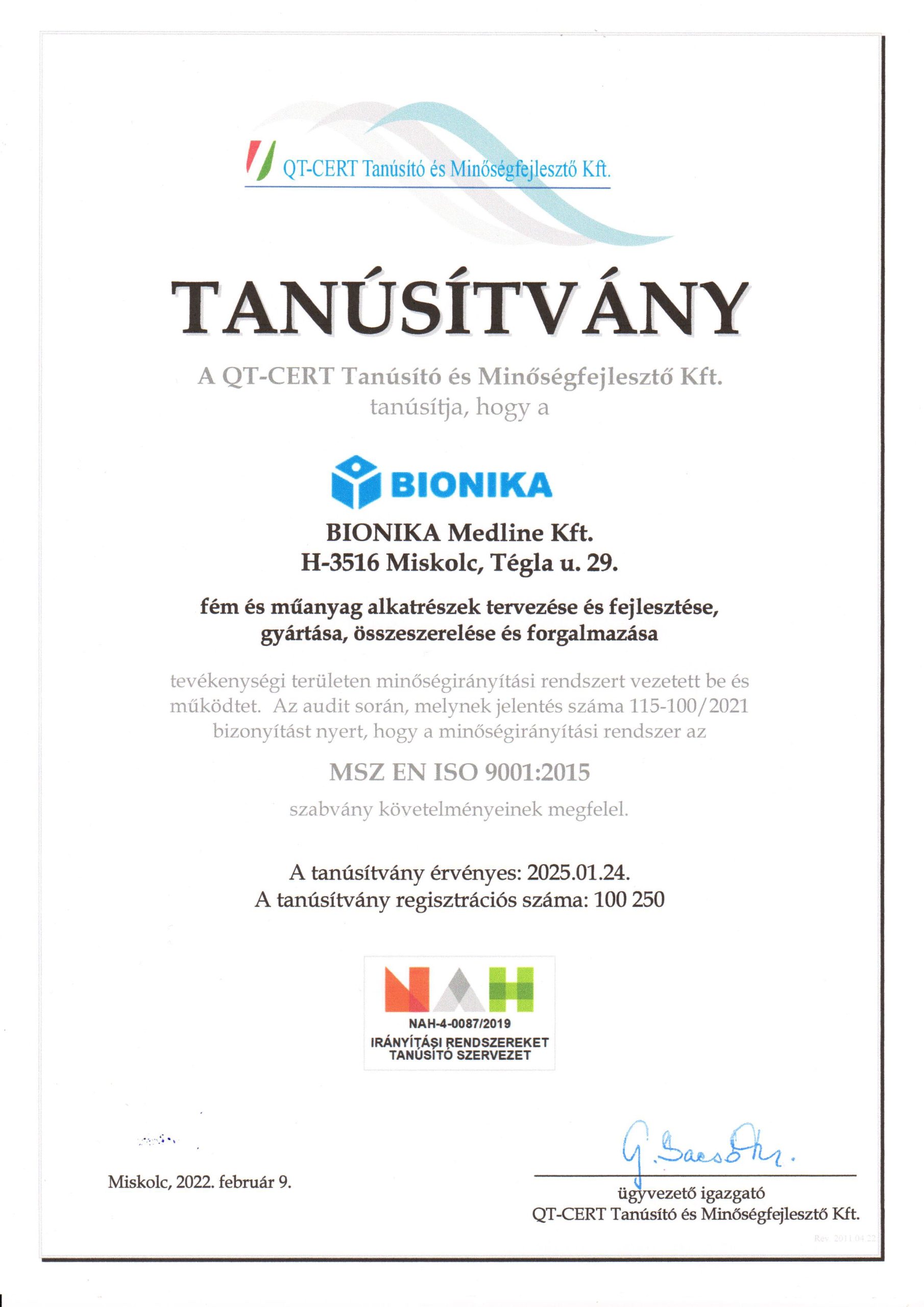
MSZ EN ISO 9001:2015
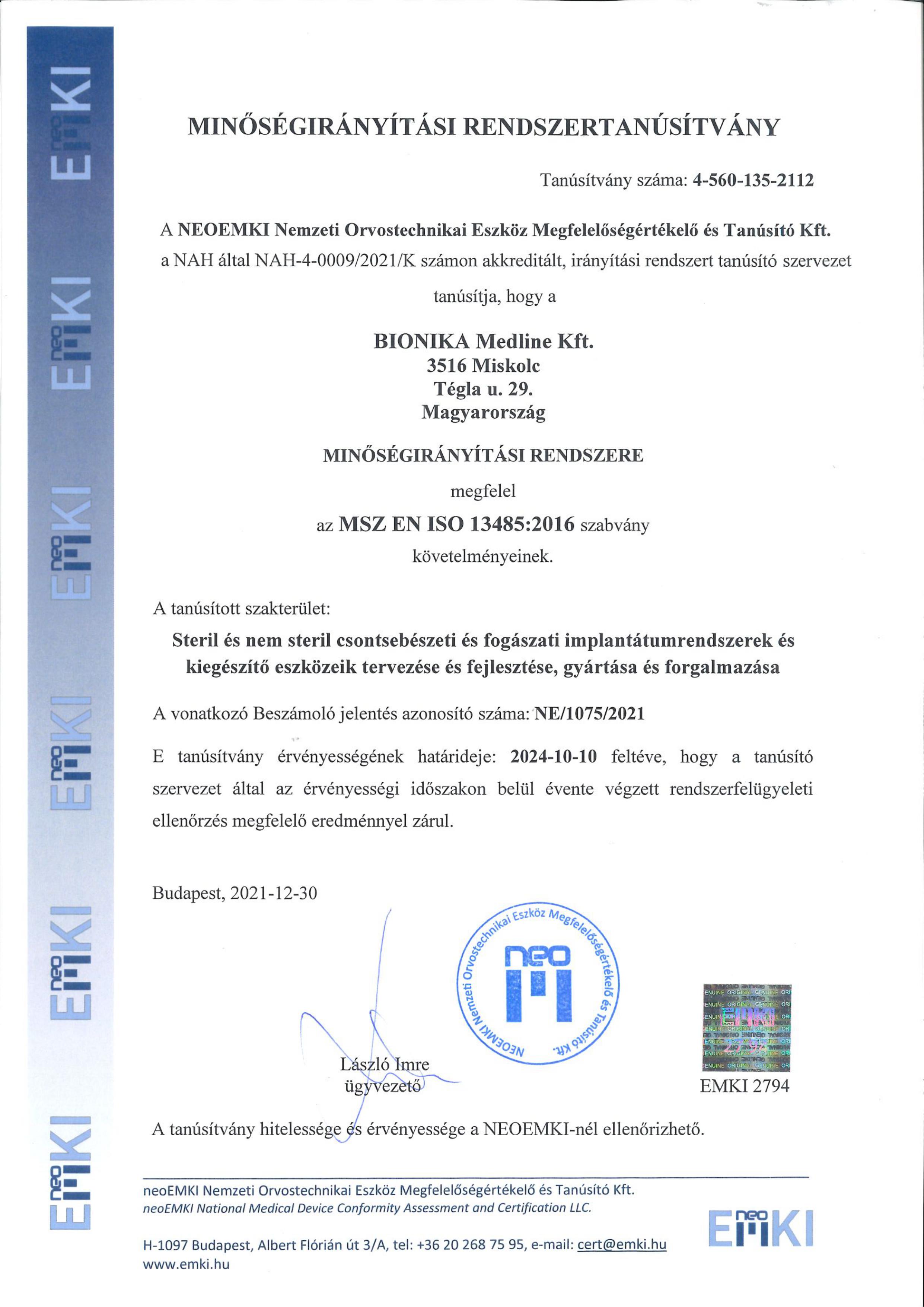
MSZ EN ISO 13485:2016
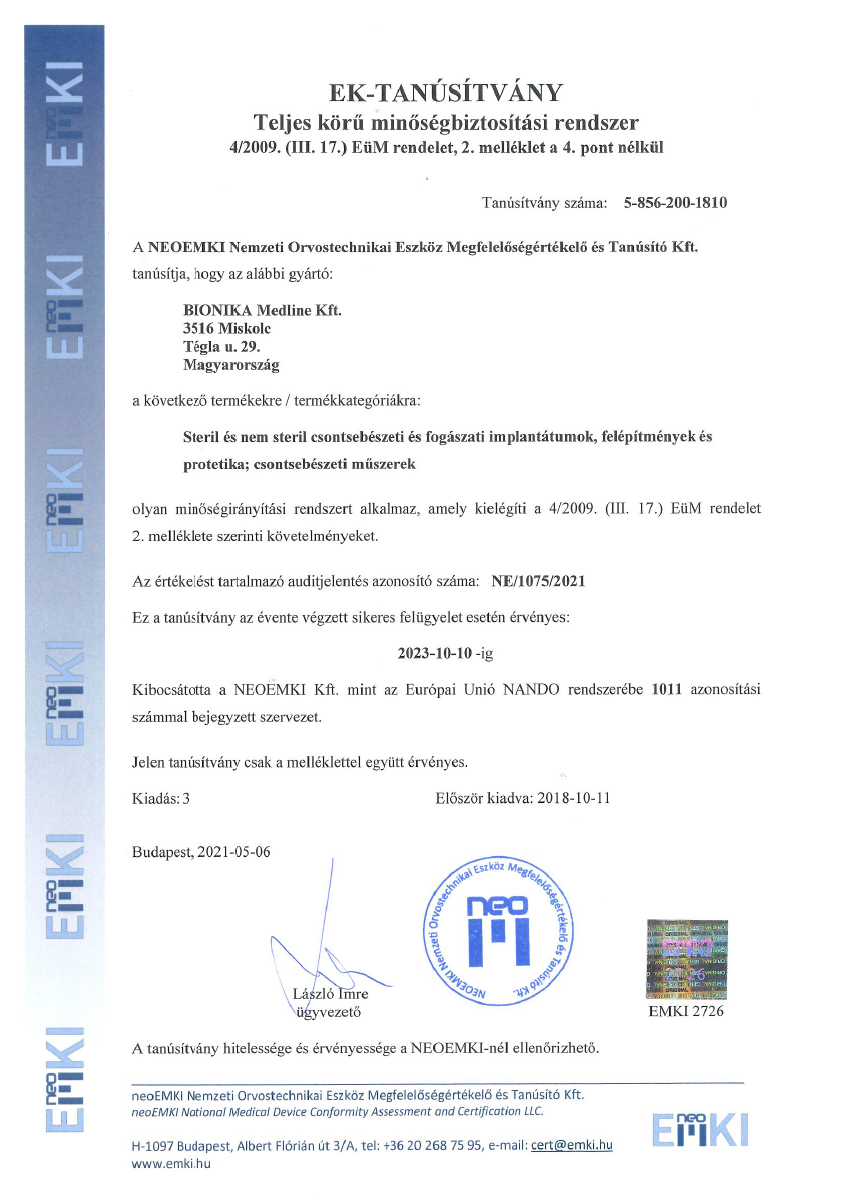
CE Certificate
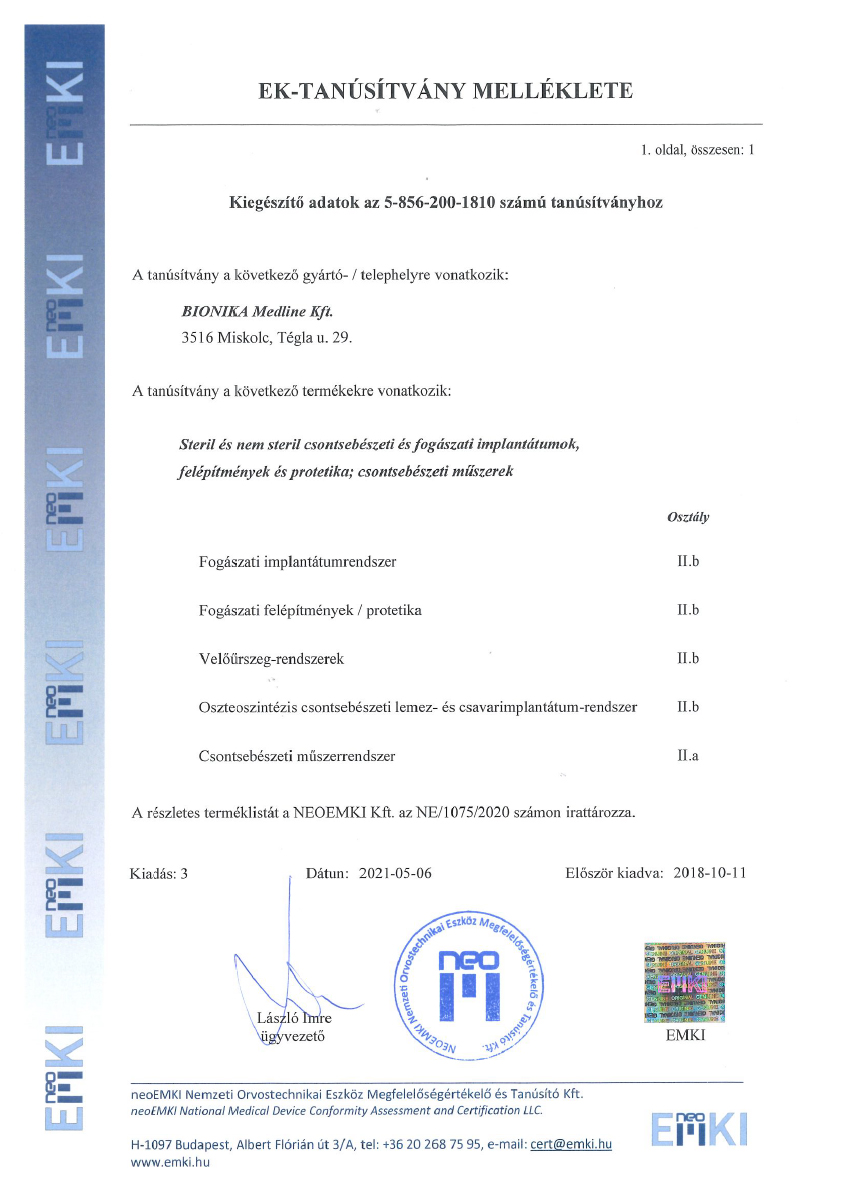
CE Certificate Annex
Sources:
- Bionika.hu
- Sulekha Gosavi, Siddharth Gosavi and Alla, R. (2013). Titanium: a miracle metal in dentistry. Trends in Biomaterials and Artificial Organs, [online] 27(1), pp.42–47.
- Hoque, M.E., Showva, N.-N., Ahmed, M., Rashid, A.B., Sadique, S.E., El-Bialy, T. and Xu, H. (2022). Titanium and titanium alloys in dentistry: current trends, recent developments, and future prospects. Heliyon, [online] 8(11), p.e11300. doi:https://doi.org/10.1016/j.heliyon.2022.e11300.