Tooth Replacement in One Step
with Single-Phase Implants
Single-phase dental implants represent a specialised field within implantology, offering rapid and often immediate solutions for missing teeth. While this approach can be particularly attractive to patients due to the shorter treatment time, it nonetheless demands thorough professional consideration from clinicians. This article reviews the mechanism of action, advantages, disadvantages, and clinical applicability of single-phase implants.
Mechanism of Action
Single-phase implants are one-piece systems in which the implant body and the abutment form a single unit. Following placement, the implant can be loaded immediately, as the connection of the abutment and the prosthesis takes place simultaneously with the implant insertion. Such implants require a faster healing process and fewer surgical interventions, since the healing period required before a second procedure — as is the case with conventional two-phase implantation — is eliminated. The design of the implants is critical to their success. Single-phase implants are generally

longer and narrower (compared to two-phase implants), so that they fit better within the bone and provide greater primary stability at the time of placement. The helical micro-grooves and deep thread design ensure maximum bone-to-implant contact, thereby enhancing primary stability.
Advantages in Clinical Practice
Single-phase implants offer numerous advantages for both patients and dental professionals:
- Shorter treatment time: One of the greatest advantages of single-phase implants is the reduced treatment time. Since the implant and the abutment are placed in a single procedure, the patient can benefit from the prosthetic restoration on the very same day. This is particularly valuable for those who do not wish to wait months for their definitive restoration.
- Simplified surgical protocol: The placement of single-phase implants requires a simpler surgical protocol, as no separate procedure is needed to fix the abutment. The procedure is generally minimally invasive, aiming to keep trauma to the soft and hard tissues as minimal as possible through smaller incisions. This approach reduces the degree of surgical trauma, resulting in less pain, swelling, and post-operative complications for the patient.
- Immediate loading: Single-phase implants can be loaded immediately, allowing patients to regain the functional and aesthetic benefits of their teeth almost at once following placement. This is especially important in cases where anterior teeth need to be restored.
- Fewer procedures, reduced costs: Single-phase implants require fewer surgical interventions, which can lower the overall cost to the patient. Fewer clinical appointments and a shorter treatment duration can mean reduced expenses for both the patient and the clinician.
Challenges and Potential Risks

While single-phase implants offer many benefits, they also present certain clinical challenges:
1. Limited indications: The use of single-phase implants is not advisable in all cases, since achieving adequate primary stability requires sufficient bone quality and quantity — a condition that is not present in every patient. If primary stability is insufficient, the implant may migrate, increasing the risk of failure. In such cases, the use of a two-phase implant may represent a safer and more predictable solution.
2. Risk of immediate loading: Although the possibility of immediate loading is advantageous, it increases the risk of micro-movements that can negatively affect osseointegration. This can be particularly problematic when primary stability is not sufficiently strong at the time of initial placement.
3. Prosthetic limitations: The prosthetic options available with single-phase implants may be more restricted than those with two-phase systems. The one-piece abutment design affords fewer possibilities for prosthetic adjustment, which can pose a challenge in more complex cases, especially when tooth position or occlusion is not ideal.
Clinical Application
The application of single-phase implants requires careful planning and meticulous patient selection. When developing a treatment plan, it is essential to consider the patient's individual anatomy, bone quality and quantity, as well as the aesthetic and functional expectations for the prosthetic restoration. Modern imaging technologies, such as CBCT (Cone Beam Computed Tomography), enable accurate diagnosis and thorough pre-surgical planning, which in turn enhances the success rate of single-phase implants.
Clinical experience to date
Clinical experience demonstrates that single-phase implants can be used successfully when the procedure is properly planned by the specialist and when the patient's bone quality permits stable placement. Many dental practices employ adjunctive techniques during the placement of single-phase implants — such as PRF (Platelet Rich Fibrin) or bone grafting materials — to enhance primary stability. These techniques can improve implant stability, reduce the risk of failure, and contribute to better long-term outcomes.
Another important factor is the adequate information and education of patients. Patients must be made aware of the advantages and potential risks of single-phase implants, as well as the necessary aftercare and maintenance. Well-informed patients are more compliant and more likely to adhere to post-operative instructions, which also contributes to a successful outcome.
Future prospects and development directions
Future developments in single-phase implants are moving towards new materials and nanotechnology-based surface treatments that promote osseointegration and reduce the risk of complications. Digital planning and guided surgery will enable more precise implant placement, while regenerative techniques such as PRF can further improve the healing process. 3D-printed abutments are expected to open even more possibilities for the fabrication of individual, customised prosthetic restorations.
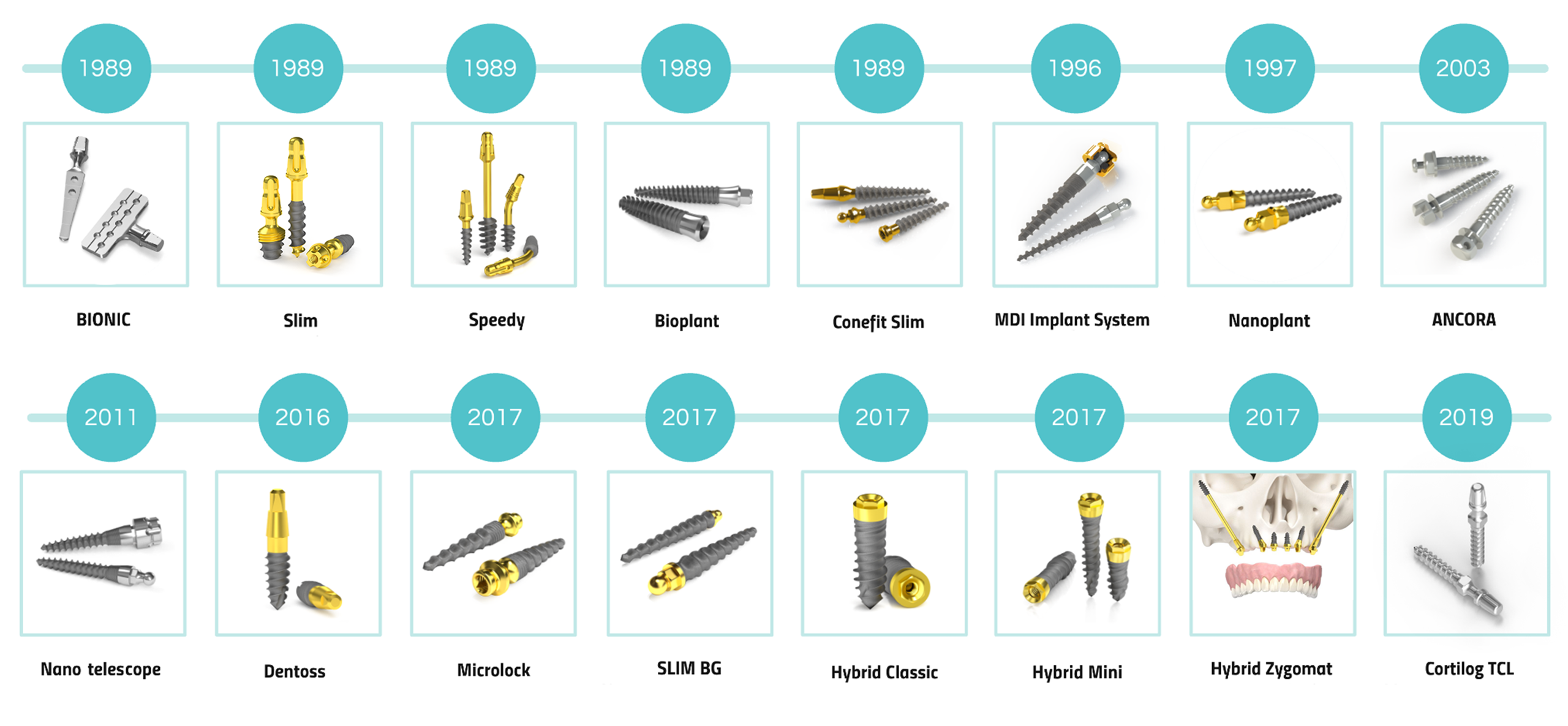
Single-Phase Implants in the BIONIKA Portfolio
BIONIKA recognised the potential of single-phase implants early on and developed several implant systems designed to meet the needs of clinicians who prefer single-phase implantation. The SLIM and SPEEDY implant systems were developed specifically to provide maximum stability and rapid osseointegration for patients, while making single-phase implantation procedures simpler and more efficient for clinicians. These systems enable rapid placement even in cases of limited bone volume, thereby reducing surgical time. The Grade 5 titanium used in the manufacture of BIONIKA implants delivers outstanding properties for dental implantology. Thanks to its exceptional purity, it provides excellent biocompatibility, combined with superior mechanical strength.
SLIM Implant System by BIONIKA
The SLIM product family, with a history spanning more than 30 years, was first developed in the early 1990s and has been continuously refined ever since to keep pace with the evolving expectations and requirements of implantologists. Having received ORKI approval in 1993, the SLIM implant system has, by virtue of its distinctive geometric and mechanical characteristics, become a trusted partner for clinicians over the years, ensuring high-level functionality and patient satisfaction. The members of the SLIM system offer comprehensive solutions covering everything from straightforward cases to complex clinical situations. The SLIM family includes the Stabile, Flexible, Parallel, and Micro implant systems.
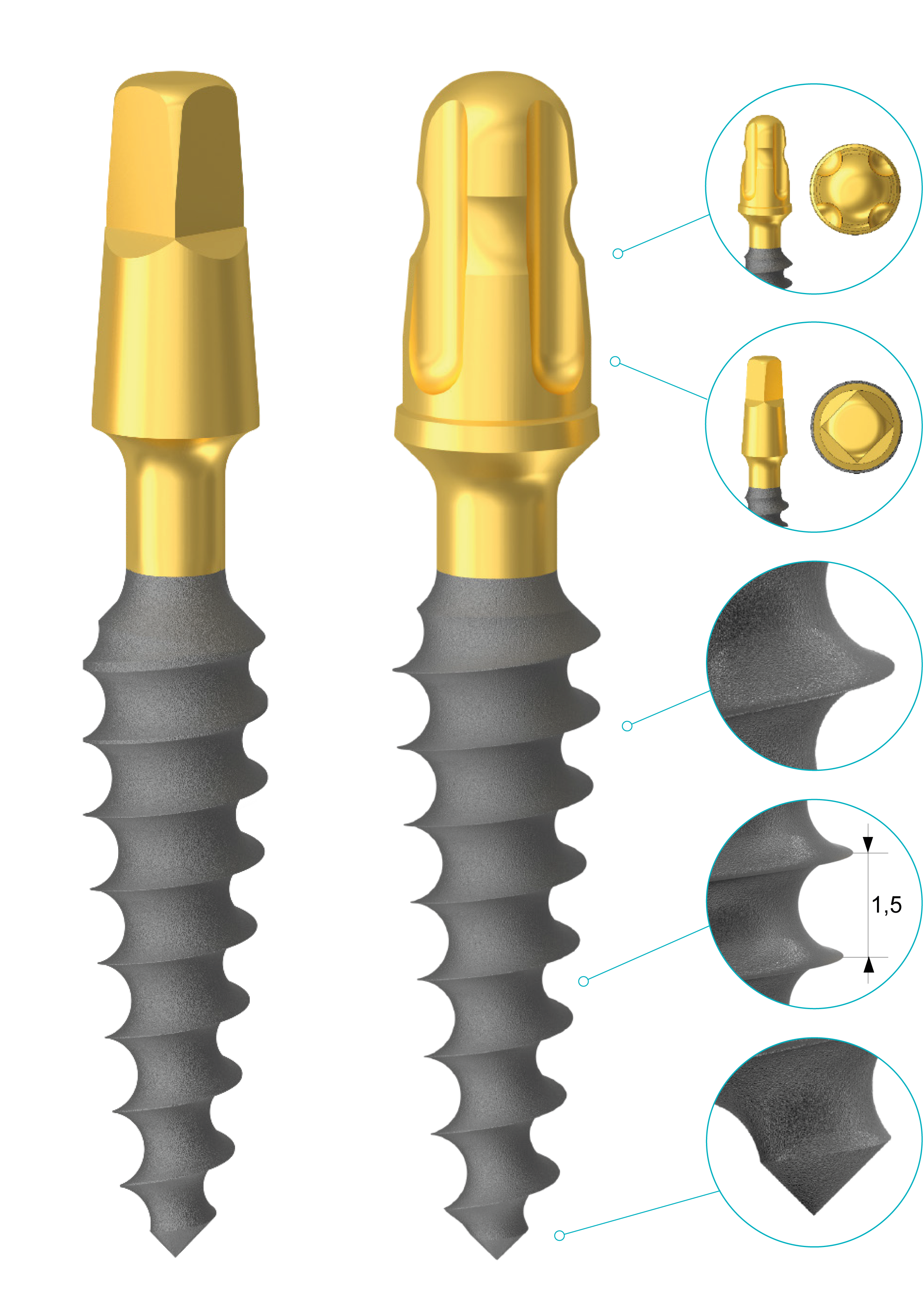
General characteristics of the SLIM family:
- radius thread-edge design,
- curved, rounded cycloid thread profile for secure anchorage,
- large thread pitch and thread depth,
- tapered self-compressing thread adapted to the natural tooth root,
thread,
- tapered thread and thin, pointed tip for bone-condensing effect
SLIM Flexible implant
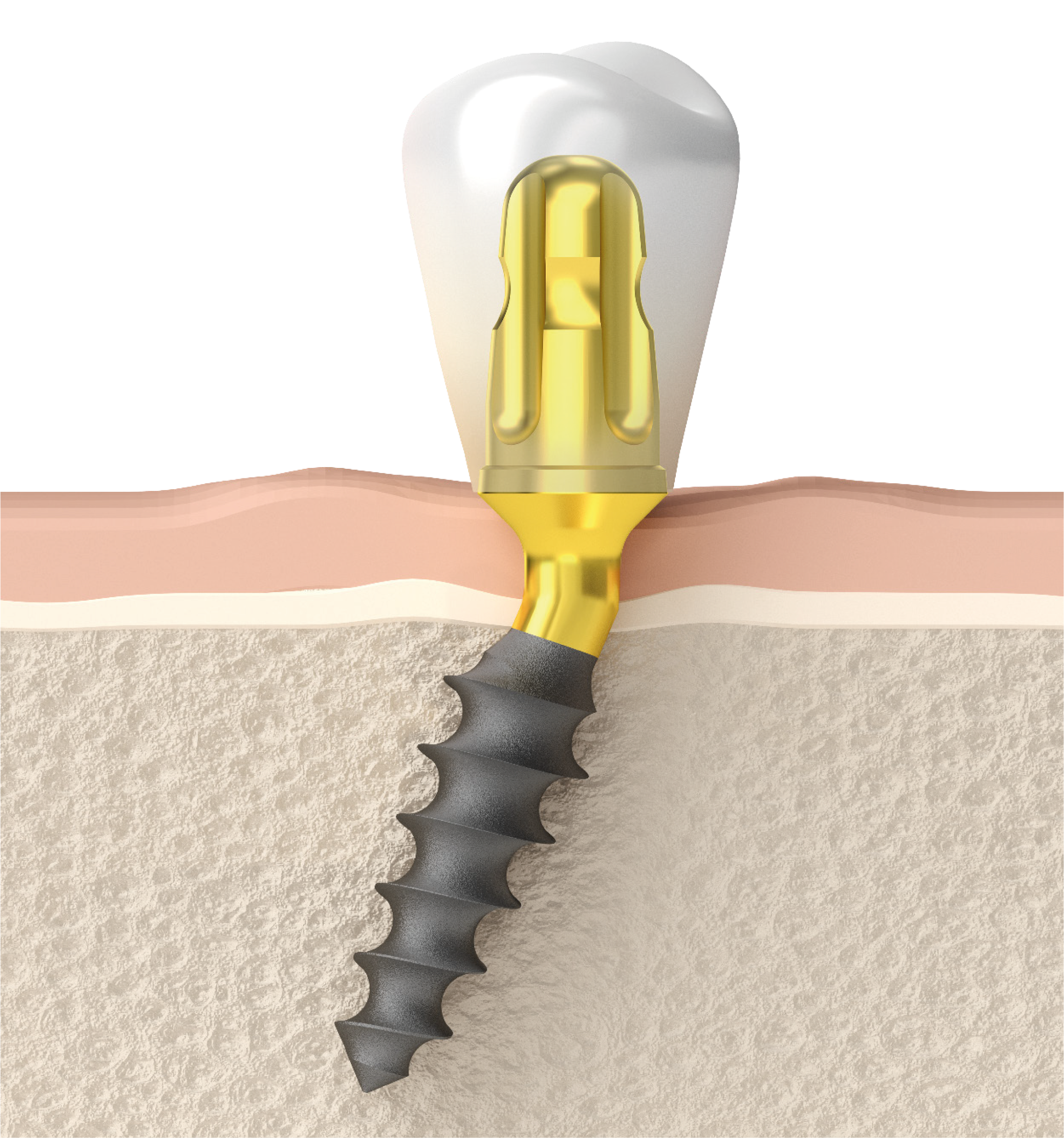
One member of the SLIM family is the SLIM Flexible implant, which inherits the geometric and surgical characteristics of the former Bauer screw, including the cycloid tapered form, the self-compressing thread structure, and the flexible zone. Thanks to the neck design that can be bent up to 20°, the implant can be adjusted intra-orally during placement, further broadening the range of applications available to the clinician across a variety of clinical situations. The Slim Flexible is available with a "Classic" (tapered, with 4 flats) or "Wide" (4-groove) head configuration. A further feature of the Flexible system is the RadialFix grooves (ø2.0 mm) and platform switching, which can result in a significant volume of supracrestal fibres — fibres growing onto the bone — and can contribute to the preservation of sub-gingival bone.
SLIM Stabile implant
The SLIM Stabile implant is characterised (as its name suggests) by a stable neck design. The implant neck length is 3 mm. The SLIM Stabile implant is available with a "Classic" (tapered, with 4 flats), "Ball Head", and "Wide" (4-groove) head configuration.
SLIM Parallel implant
The Parallel variant of the SLIM family is an ideal solution for cemented prosthetic restorations. The thread has a parallel outer contour, which ensures even load distribution and thereby provides reliable long-term fixation. The polished implant tip prevents bacterial adhesion and also facilitates placement, as it allows the implant to engage easily with the cortical bone.
SLIM Micro implant
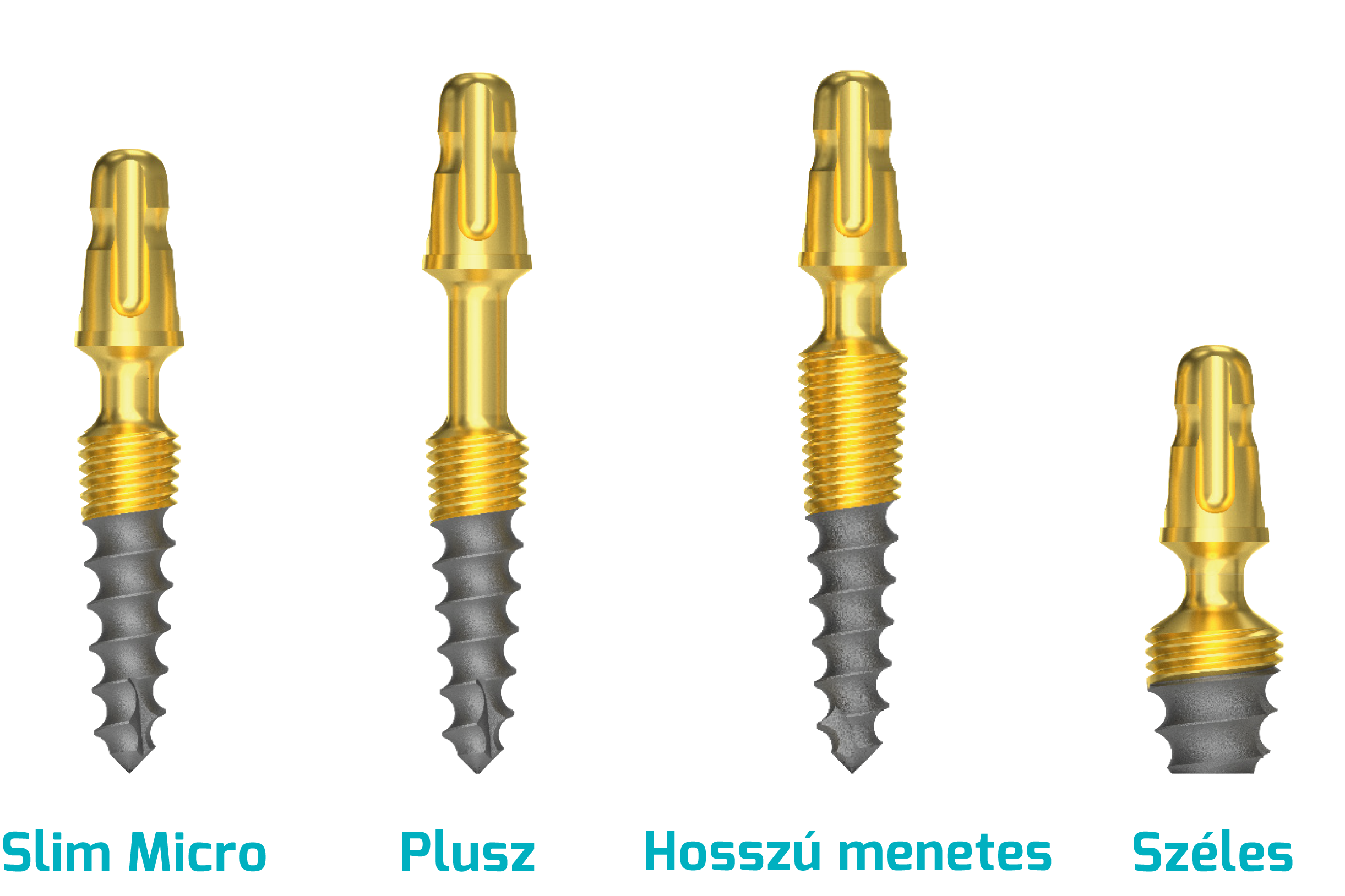
Another member of the SLIM family was developed under the name Micro. The micro-thread at the upper third of the implant, the anti-rotation cutting edge, and the 4-groove rounded head configuration greatly facilitate the work of the clinician, as these features enhance stability, ensure precise placement, and reduce the difficulties encountered during the procedure. The SLIM Micro is also available in "wide", "long-thread", and "plus" (long-neck) variants.
SLIM Compact implant
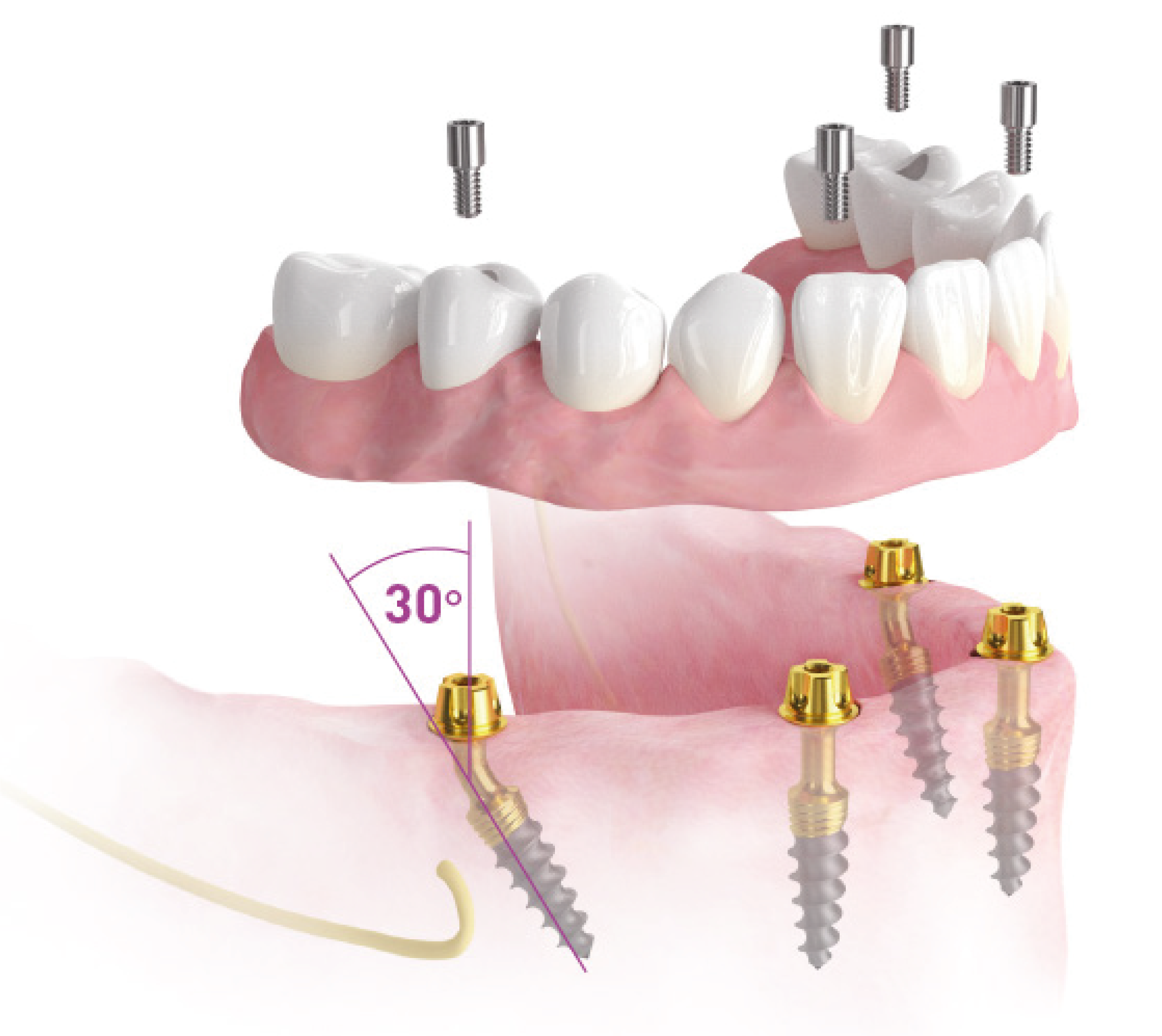
The SLIM Compact implant is one of the newest members of the SLIM family. It was created by adapting the multi-unit solutions found among the abutment components of two-phase implant systems, comprehensively extending the application possibilities of single-phase implants beyond cemented prosthetics to include the broad use of screw-retained restorations.
SPEEDY Implant System by BIONIKA
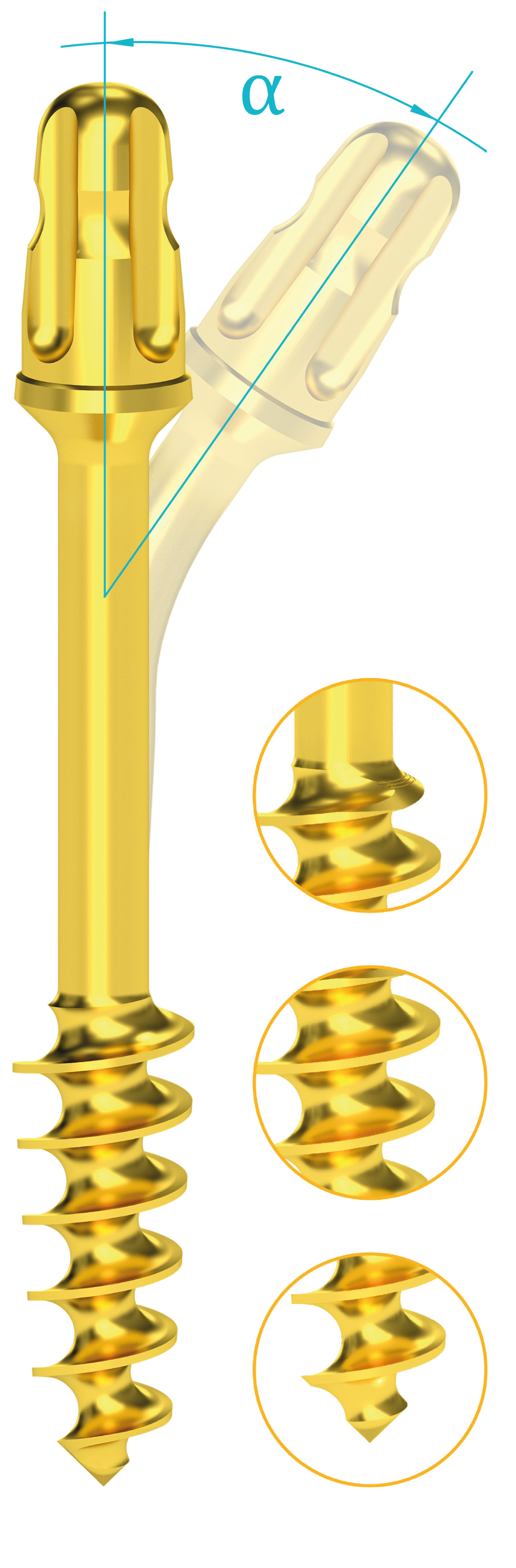
The distinctive characteristics of the SPEEDY implant system make it one of the most suitable solutions not only for average-density bone but also for softer bone structures, as well as for indications requiring bicortical support. Its flexibility makes it particularly well suited for retaining temporary prosthetic restorations. In terms of head configuration, it is available in both "Classic" (tapered, with 4 flats) and "Wide" (4-groove) designs. The system is complemented by impression coping and technical implant accessory components.
Key features of the SPEEDY Implant System:
• flexible aesthetic head design (up to 35°),
• platform switching,
• radius thread-edge design,
• cycloid thread profile,
• large thread pitch and thread depth,
• tapered, self-compressing thread adapted to the natural tooth root,
• thin, pointed, tapered tip,
• anti-rotation cutting edge
Summary
Single-phase dental implants offer an effective and rapid solution for missing teeth, particularly for patients seeking immediate results. These implants can be especially beneficial for restoring teeth in the aesthetic zone, where an immediate outcome is critical. At the same time, it is important that clinicians carefully assess each patient's individual circumstances and plan the implantation procedure with precision. With the appropriate use of single-phase implants, patients can regain both the functionality and aesthetic appearance of their dentition — not only quickly, but durably.
Article information
- Author | Hajdú József
- Date | 2024.06.29
- URL | www.bionika.hu