A Guide to Finding the Perfect Dental
Implant System
Dental implants are among the most important innovations in modern dentistry, enabling the replacement of missing teeth and restoring patients' chewing function and aesthetic appearance. Today, selecting the right implant system can be a complex process, as more than 150 different brands and countless variations are available worldwide. The following overview outlines the key criteria for choosing the system best suited to your needs.
1. Material Selection
The majority of dental implants are typically manufactured from medical-grade titanium; however, ceramic implants have also entered the market in recent years. The choice of implant material is an important consideration, as it affects the success of the placement and the long-term performance of the implant.
Titanium implants: Titanium is one of the most widely used materials in dental implant manufacturing, owing to its biocompatibility and excellent mechanical properties. Titanium implants integrate readily with bone, providing stable fixation. Furthermore, titanium is corrosion-resistant, guaranteeing long-term reliability.
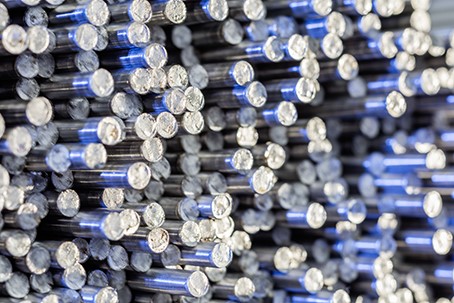
Due to its particularly high flexibility, titanium is less prone to fracture, thereby providing a reliable and durable solution.
Ceramic implants: Ceramic implants are made from zirconium dioxide. Because they are white in colour, they more closely resemble natural teeth, which is especially important when replacing anterior teeth. In addition to being biocompatible and allergen-free, they are corrosion-resistant and less sensitive to temperature changes. However, ceramic implants are considerably more brittle than titanium implants, which can make them more susceptible to mechanical loading. A further disadvantage is that they are substantially more expensive, which can represent a significant financial burden for patients.
2. Design and Surface Treatment
Implants feature a variety of design and surface treatment solutions that influence osseointegration.
• Screw design: Screw-type implants are the most common, as the threaded form provides excellent stability within the bone. This design allows for straightforward placement and removal when necessary.
• Surface treatment: Implant surfaces can be treated in various ways to promote bone growth and implant stability. Acid etching, sandblasting (SLA), and anodisation improve osseointegration, resulting in faster healing. Technologies such as the "Superclean" surface treatment developed by BIONIKA promote superior tissue integration. Thanks to our proprietary surface treatment, BIONIKA implants can be placed with a significantly higher survival probability compared to the international average.
3. Size and Connection Options
The size of the implant and the type of connection are also important factors in selecting the right system.
Size:
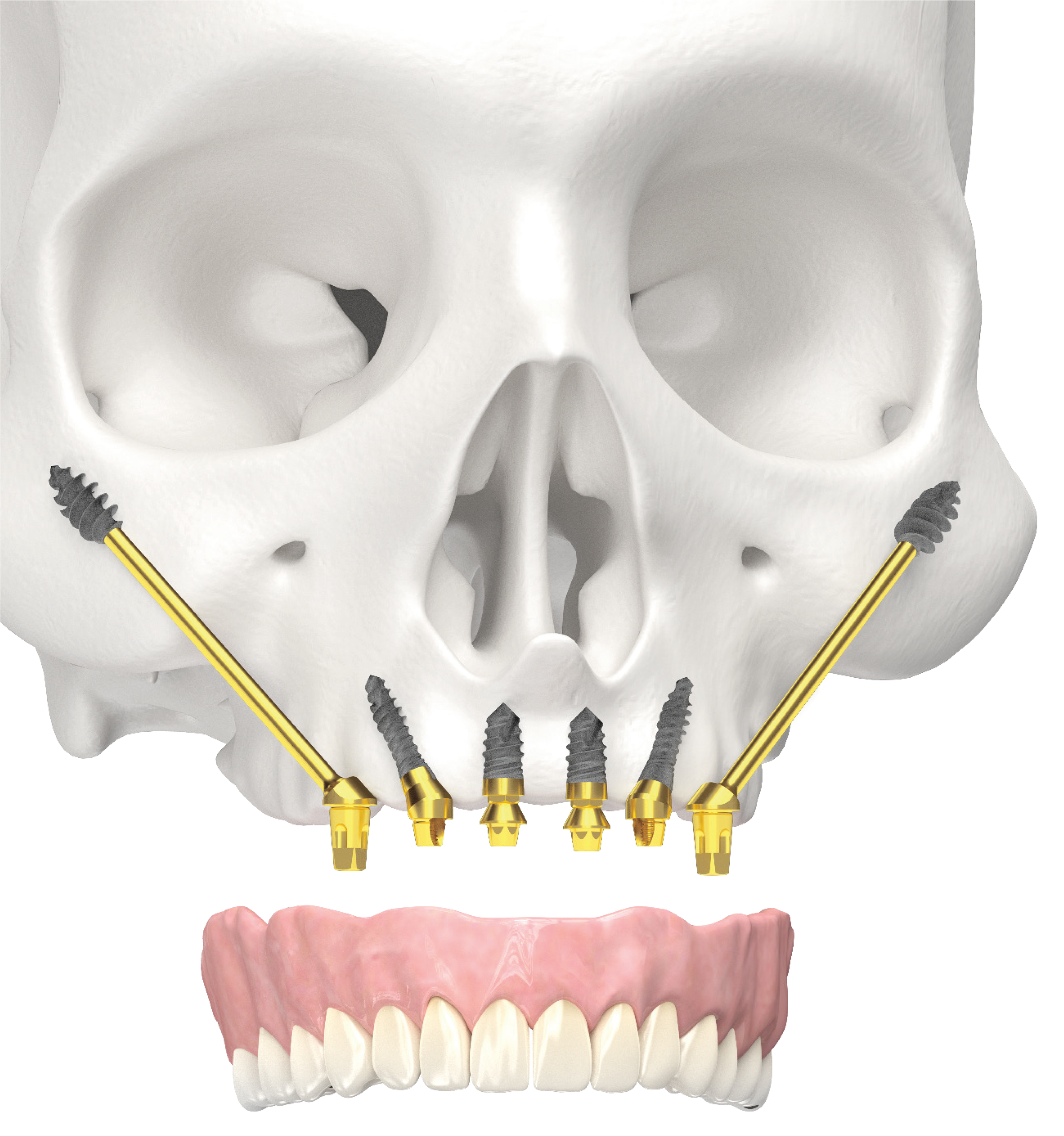
The diameter and length of an implant depend on the dimensions and quality of the patient's bone. Specialists typically use 3D imaging to determine precise measurements and ensure the correct fit of the implant. Dental implants can be categorised by size, varying according to the placement site and bone quality. The following size categories are recognised within the profession.
Standard (regular-diameter) implants
• Diameter: 3.4–4.2 mm
• Length: 7–16 mm
• Application: These are the most commonly used implants and are generally suitable for the majority of tooth replacement cases.
Wide (wide-diameter) implants
• Diameter: 4.5 mm or larger
• Length: 7–16 mm
• Application: These implants provide greater stability and are generally used for replacing posterior teeth, where occlusal forces are higher.
Mini (narrow-diameter) implants
• Diameter: 2–3.3 mm
• Length: 7–18 mm
• Application: Primarily used in narrow sites or as a temporary solution. Mini dental implants are ideal for stabilising removable dentures when bone volume is limited.
Short (extra-short) implants
• Diameter: 3.3–6.0 mm
• Length: 5–6 mm
• Application: These are indicated in cases where bone height is limited and localised vertical bone deficiency must be taken into account.
Long implants
• Diameter: 3.3–6.0 mm
• Length: 16–20 mm or longer
• Application: Less commonly used; generally reserved for special cases such as the replacement of multiple missing teeth, unusual anatomical conditions, or zygomatic fixation.

Connection:
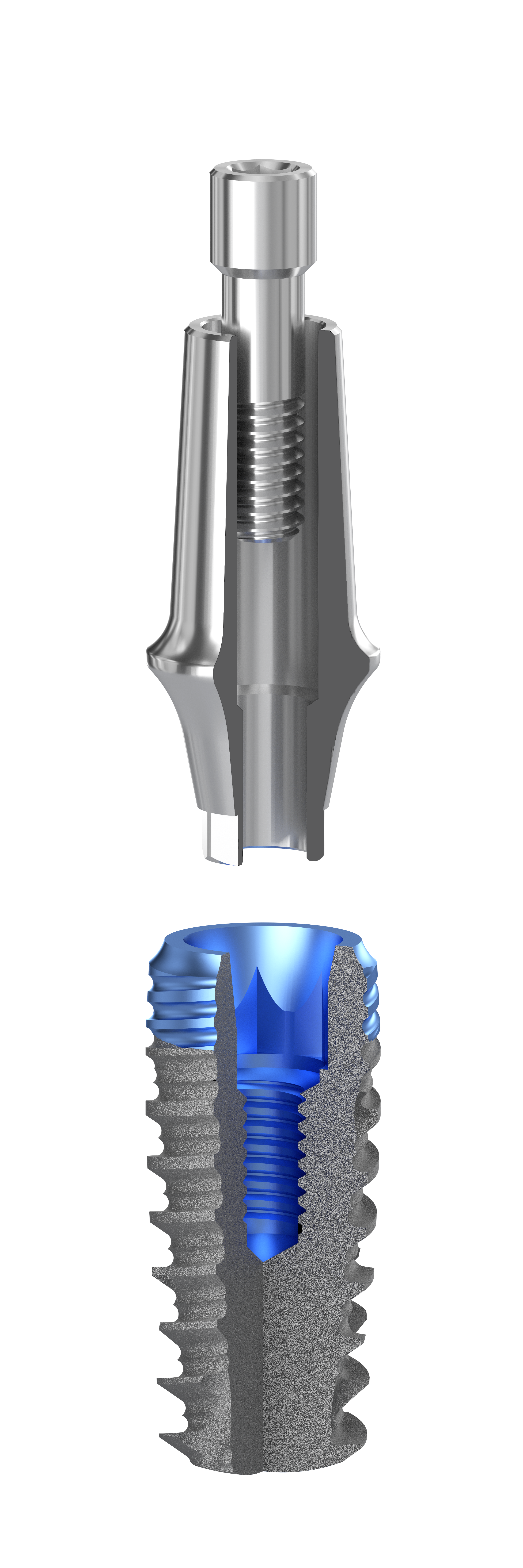
The connection type between the implant and the abutment can take several forms. The various connection options used in modern dentistry each offer distinct advantages in terms of both stability and aesthetic outcomes, enabling the development of personalised treatment plans. The following are some of the most common connection options available:
- Internal hexagonal connection: The internal hexagonal connection uses a six-sided internal geometry within the implant body, ensuring stable and precise engagement. This type of connection is widely used and straightforward to work with.
- External hexagonal connection: The external hexagonal connection uses a six-sided protrusion on top of the implant onto which the abutment is fitted. This older connection type is simple and reliable, though less stable than the internal hexagonal variant.
- Conical (tapered) connection: The conical connection employs a tapered design that provides a strong, stable fit between the implant and the abutment. This connection type offers excellent stability and allows minimal micro-movement.
- Dual platform-switching connection: The dual platform-switching connection exploits the difference in diameter between the implant and the abutment to reduce bone loss and improve soft tissue stability. This solution also offers favourable aesthetic possibilities.
- Morse taper connection: The Morse taper connection employs a highly precise, conical fit that provides outstanding mechanical stability and a tight seal. This type is particularly resistant to micro-movement and bacterial infiltration.
4. Placement Technique
In terms of placement technique, a distinction is made between single-phase (immediate loading) and two-phase (delayed loading) implants. Single-phase implants require faster treatment and fewer surgical interventions, while two-phase implants offer greater stability and broader applicability. Interestingly, the Hungarian dental profession holds divided opinions on single- and two-phase implants; some practitioners prefer working with the former, others with the latter.
Single-Phase Implants
Looking back at the history of implants, it can be said that the first constructions imitating tooth roots and featuring a crown-retaining head section were single-phase. The greatest success was achieved by Bauer-type implants, which possessed advantages and properties that place them among the most advanced designs to this day. These advantages include minimally invasive surgical technique, platform switching, and curved thread profiles that best adapt to biological conditions. From an engineering perspective, single-phase implants rightfully claim the title of the most efficiently applicable technical solution, thanks to their flexible characteristics.
The distinctive feature of single-phase implants is that they are placed in a single surgical procedure and can be loaded immediately. After implant placement, the pre-designed prosthetic restoration is attached to the implant without delay, allowing patients to immediately enjoy the aesthetic and functional benefits of their new tooth. This approach is particularly advantageous for those seeking a fast and efficient solution, as the entire process can be completed in a single visit. Additionally, fewer surgical interventions are required, making the procedure more comfortable and less burdensome for patients.
Single-phase implantation can achieve long-term success when bicortical or tricortical support is available and when a prosthetic restoration can be designed that ensures osseointegration with sufficient primary stability across an adequate number of implants. Single-phase implants offer a rapid and convenient solution; however, not all patients are suitable candidates, particularly those with insufficient bone volume. Immediate loading may increase the risk of micro-movement, and if initial stability is inadequate, the likelihood of implant loss is also greater. The prosthetic options for single-phase implants are more limited compared to their two-phase counterparts.
Two-Phase Implants
Two-phase implants are solutions that are placed through two separate surgical procedures. In the first phase, the implant is inserted into the bone, after which a period of approximately 3 months is allowed for osseointegration, ensuring that the implant becomes firmly integrated with the bone. The second phase then follows, during which the abutment and final prosthetic restoration are connected to the implant.
Although the use of two-phase implants requires a longer treatment period, they offer numerous advantages. The extended healing time allows the implant to integrate more strongly and stably with the bone, providing greater long-term stability.
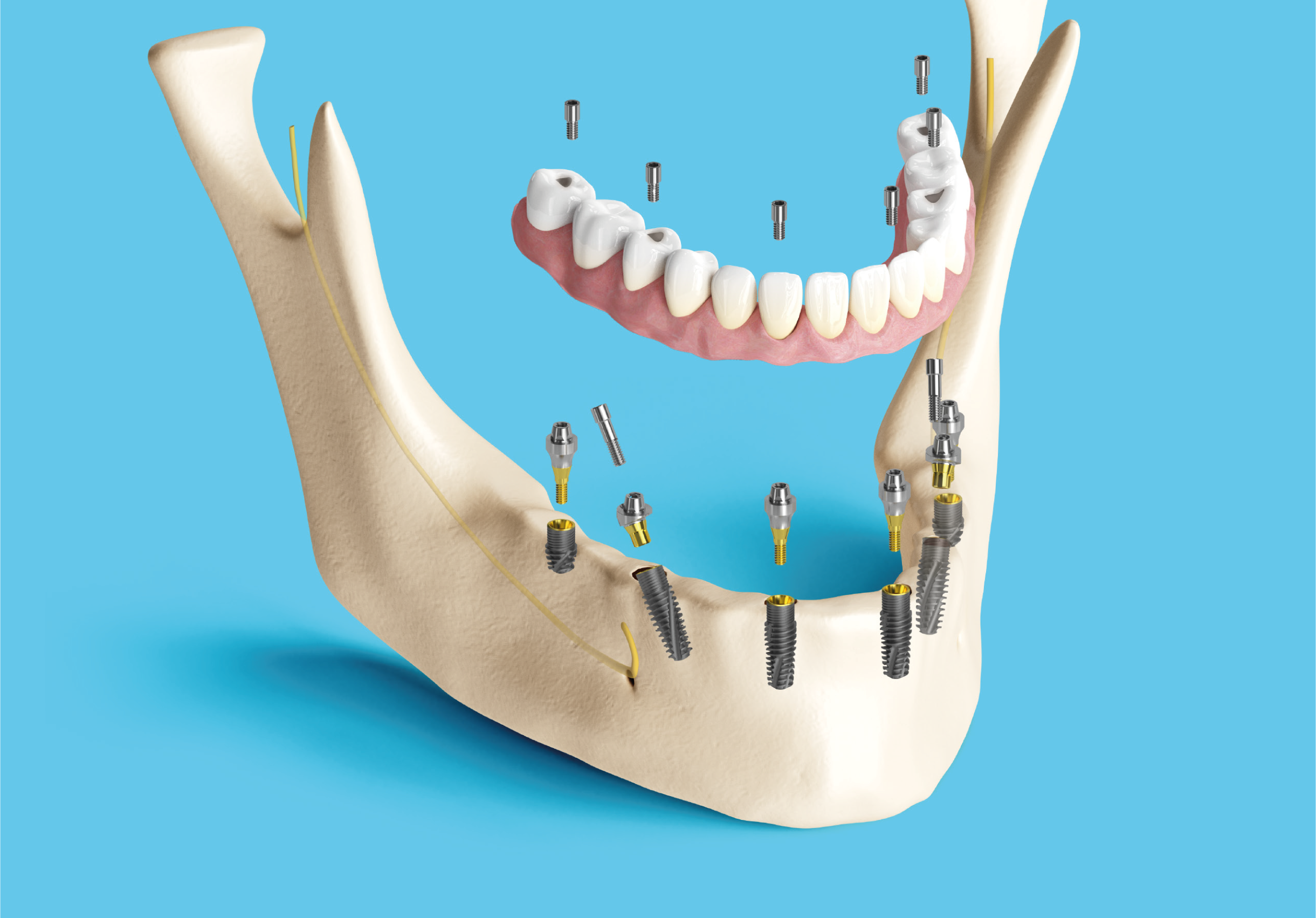
This method is applicable in a wider range of cases, particularly for patients whose bone volume is not optimal or for whom single-phase implants are not suitable. Two-phase implants are broadly applicable across various clinical situations, including complete and partial edentulism, as well as complex cases requiring significant preparatory surgery such as sinus lifting or bone grafting.
From an aesthetic standpoint, two-phase implants are especially well-suited for anterior teeth, where appearance is of paramount importance. Thanks to the wide range of two-phase implants and associated abutments available at BIONIKA, clinicians are able to fabricate every type of prosthetic restoration, whether screw-retained, cemented, or removable. When multiple teeth are missing, a bridge is often the preferred solution, though individual tooth-by-tooth replacement is also an option. Abutments are available in a wide variety of configurations, enabling the dentist and dental technician to create restorations that perfectly match the individual needs and anatomical conditions of each patient.
5. Placement Site
Dental implants can also be classified by placement site, enabling adaptation to different clinical situations and bone conditions. According to the site of placement, a distinction is made between endosseous, subperiosteal, and transosseous implants, each with different characteristics.
- Endosseous (bone-placed) implants: These implants are inserted directly into the jawbone. In terms of shape, they may be screw-type, cylindrical, or blade-form. They provide high stability, as the implants integrate directly with the bone, resulting in strong and durable fixation. Bone-placed implants are the most widely used, as they are available in a variety of forms and sizes. They are primarily used for single-tooth replacement as well as for the anchoring of bridges and complete dentures.
- Subperiosteal implants: These implants are positioned on the surface of the jawbone, beneath the gingiva, and do not penetrate the bone. Subperiosteal implants are mainly used when the patient's bone volume is insufficient for endosseous implants, or when bone augmentation is not possible. The implants are secured with a metal framework.
- Transosseous (through-bone) implants: These implants pass through the entire thickness of the jawbone and provide fixation on both sides. This type of implant is less commonly used and is mainly applied in the mandible where other solutions are not feasible. These implants are considered when conventional methods cannot provide sufficient stability.
6. Procurement Costs

Trialling new systems is a time-consuming and often costly process. Manufacturers' prices for implants can vary significantly depending on the materials and technologies employed, and research and development costs as well as the complexity of manufacturing processes also have an impact on pricing. Moreover, brand reputation and the warranties offered by the manufacturer further influence pricing, not to mention the instruments and abutments required.
The implants and abutments offered by BIONIKA are priced to meet every requirement, enabling you to obtain high-quality, reliable products at competitive prices — products that provide a long-term solution for your patients.
Conclusion
Selecting the most suitable dental implant system requires thorough research and expert consultation. The best decision can be reached by taking into account the various materials, designs, surface treatments, and connection solutions available. Our expert team is happy to help you find the implant system that best matches your needs and expectations. Contact us by email or telephone so that together we can identify the ideal solution for you!
Article information
- Author | Hajdú József
- Date | 2024.07.05
- URL | www.bionika.hu